
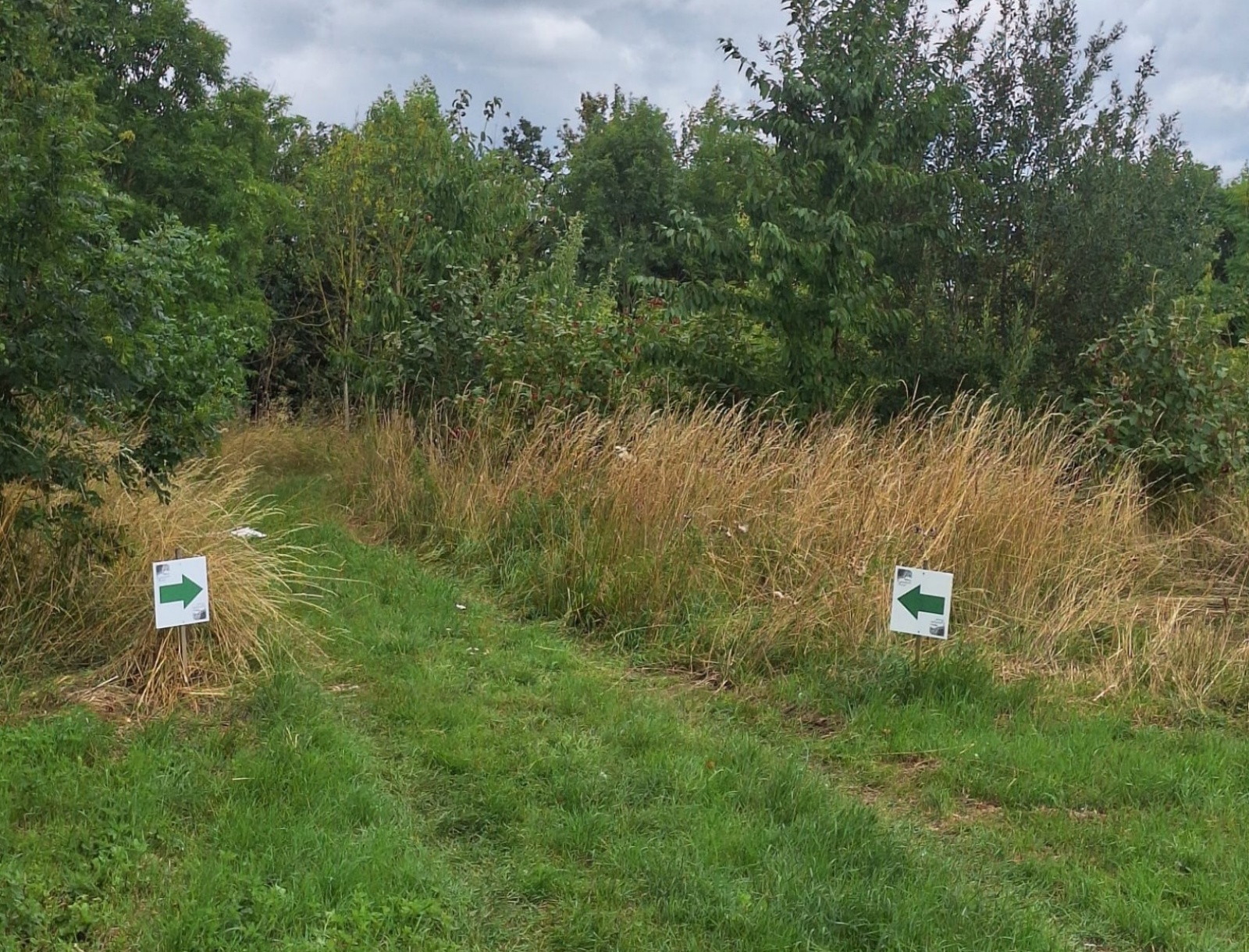
Christ’s College Pits Nature Reserve, is set to double in size, creating more space for wildlife including Glow Worms, Small Copper Butterflies, ducks, egrets and owls.
This expansion has been made possible through an agreement with landowners Milton Estate and Tarmac, who will work in partnership with Langdyke to manage the expanded reserve, initially for a three year period.
Christ’s College Pits Nature Reserve was established in 2024 when the Trust purchased the site from Christ’s College, Cambridge who had owned the land since the 16th century. Originally part of a medieval wetland, known as Westings Meadow, the land was used for gravel extraction in the early 20th century and then restored with areas of wildflower rich grassland, two large lakes and woodland.
Immediately south of the existing 22 acre Langdyke reserve are two other pits with a similar history and wildlife potential.
These are owned by Milton Estate and have recently been restored after gravel extraction by Tarmac. The four pits will now be managed in partnership with the aims of increasing biodiversity and helping visitors understand more about the heritage and wildlife of the site.
The existing reserve has three public viewpoints that are accessible at all times and is open to Langdyke members, who can enjoy the trails around the pits. The Trust also runs regular guided walks around the site.
Since buying the site, Langdyke has opened up areas of the site to encourage wildflowers and installed tern rafts, new ponds, bird boxes, log piles and grass heaps. Similar management will now be possible across all four pits, with external viewpoints from the South Drain and adjacent public footpaths, linking into the recently established Maxey Cut information trail, funded by the Environment Agency.
Christ’s College Nature Reserve is already home to Otters, Kingfisher, breeding Great Crested Grebe and Common Tern. It supports a healthy population of Glow Worms, many species of dragonfly and several mysterious insects, such as the Spot-sided Pigmy Snailkiller and the Orange Thighed Beegrabber.
Steve Zealand, Langdyke’s reserve warden at Christ’s College Nature Reserve, said, “We’re delighted to be able to expand our work across the land south of the existing reserve and very grateful to our partners, Milton Estate and Tarmac.
”We all know that wildlife needs bigger, more joined up sites in order to flourish and the new reserve not only doubles the area we can managed for nature here, but also links up two Langdyke reserves.
“This means we now manage an uninterrupted area of land alongside the South Drain, totalling over 80 acres, as well as our 90 acre Etton Maxey Pits just on the other side of the Maxey Cut. We look forward to creating new homes for nature on the new land and exploring its nooks and crannies to see what else we can discover there.”
For hundreds of years Christ’s College Nature reserve was part of Westings Meadow. This flood meadow on the edge of the Fens, with a river meandering through its centre, was a precious resource for wildlife and local communities.
John Clare knew this place well and wrote about the view across the fields to Maxey’s church tower “looking as it was lighted up with sunshine”, and hedges full of red hawthornberries. In winter, he loved to walk to Lolham Bridges and listen to the roar of the river!
In Medieval times, Westings Meadow was divided into small plots owned by many different people. Each year, after the harvest, others from the surrounding villages could use the land to graze their sheep, cattle and geese.
The creation of the expanded nature reserve at Christ’s College Pits is an initiative within the John Clare Countryside project, an ambitious initiative designed to create a large and accessible nature recovery area across the landscape areas west of Peterborough to the A1, south to the River Nene and north to the River Welland, designed, led and supported by residents, landowners, farmers, businesses and parish councils of the area. Working collaboratively the project partners want to ensure that we conserve the beauty of our landscapeand conserve its rich local heritage and establish an area characterised by
• Outstanding natural biodiversity through major habitat restoration connected through a mosaic of smaller wildlife havens and corridors
• Prosperous and successful farming, profiting from a combination of environmentally friendly farming practice, sustainable tourism and recreational activities.
• Well-kept heritage sites, linked through the figure head of John Clare, accessible to all and working together to involve and attract visitors and to support literary and artistic work and literacy.
• An unspoilt landscape that is enjoyed sustainably by local people and the people of an expanding Peterborough, providing them with a large area of unspoilt countryside on their doorstep, rich with places to visit, cycle paths, footways and ‘quiet roads’ – a green transport infrastructure – where priority is given to walkers, cyclists and horse riders.