
The Natural world – Richard Astle’s round up of nature happenings in Langdyke land covering the early parts of the summer period
June-July 2026
The first two months of Summer 2026 will be remembered, I am sure, for the four heatwaves and unbroken dry spell, the hottest and longest in history. And while that translated into many fine, sunny days, it also put increased stress on our local wildlife – creating water scarcity and making it harder for many species to feed and indeed find shelter from the heat.
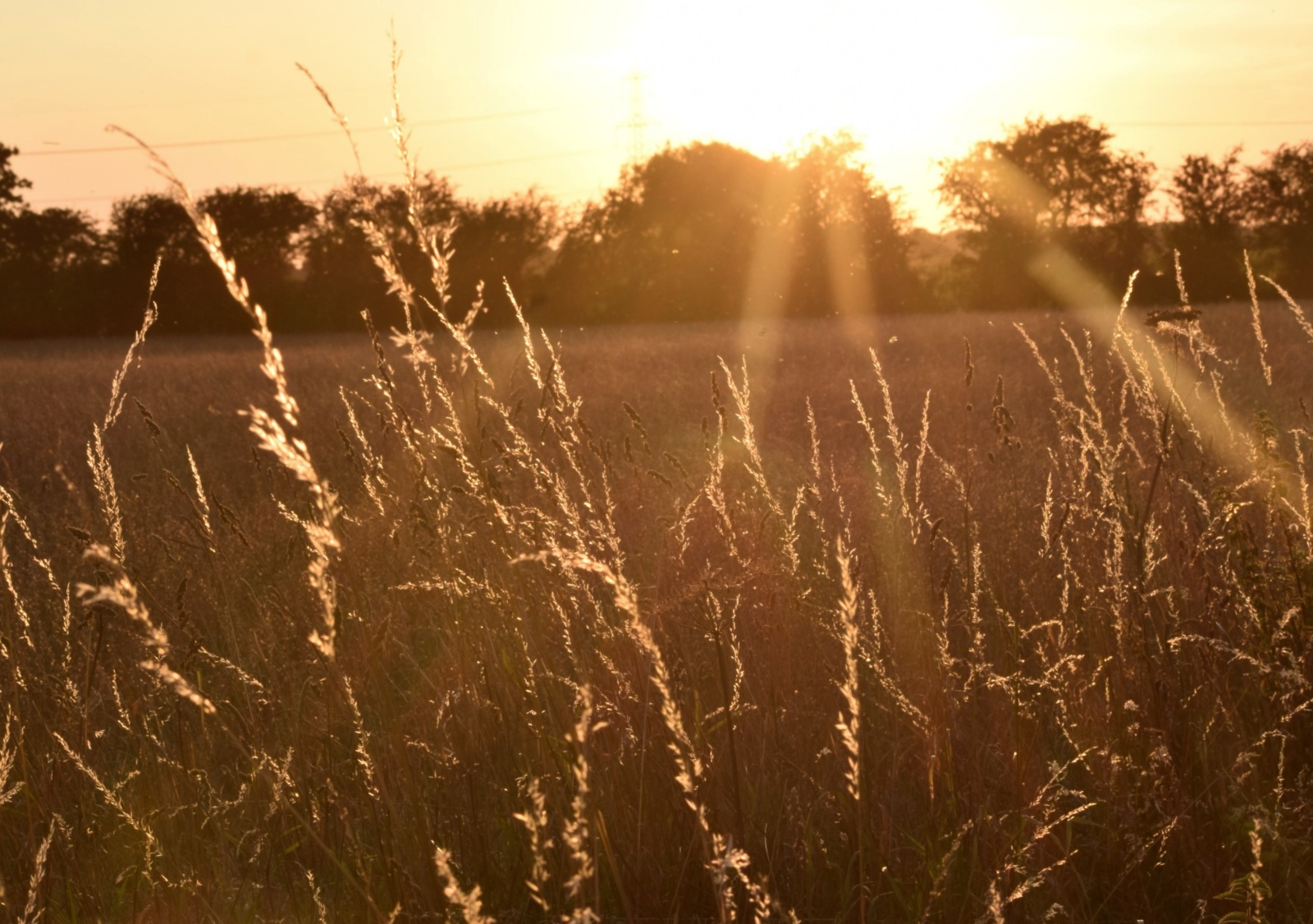
Photo: Jackie Robinson
We won’t know for some time the long-term impacts, but if longer, hotter Summers are the new norm, we can expect significant changes in both the abundance and diversity of our local flora and fauna.
We’re seeing plenty of change already. Many observers noted the increase in Hummingbird Hawk Moth, once a rare migrant, now a regular garden appearance. Jersey Tiger and Scarlet Tiger Moth were also much commoner and there were several sightings of Lesser Emperor dragonfly – another former rare migrant – along the Cut wetlands. Small Red Eyed Damselfly is well established at Frank’s Pit and at Christ’s College NR, it was first seen in the country in 1999.
The hot nights in June and July brought many species of moth to the light in gardens in Helpston, and Barnack, including a number of records of Four Spotted Moth and of elm specialists such as White Spotted Pinion. Seven Red Belted Clearwing were lured to my Helpston garden on June 28!
Marbled White butterfly were reported at Etton Maxey Pits in June, as well as Swaddywell and Barnack Hills and Holes and Purple Emperor were seen by several people at the Hanglands in early July. And it was another great year for Black Hairstreak there too, with large numbers on the wing in early June. There were two White Admiral there on June 7, but none reported from Royce Wood this year. Purple and White Letter Hairstreak were seen on the South Drain in late June.
Turtle Dove seemed to be harder to find again this year, which is a significant worry, but they were regularly seen nonetheless, particularly in Maxey and there was an immature seen in Etton in July, proof of a successful breeding season for at least one pair. A pair of Marsh Harrier successfully raised young in the area, and there were regular sightings of Bittern throughout the period. Nightingale had a decent year at the Hanglands with additional singing males at Bainton Heath and Fisheries (at least 3) Southey Woods (1) and Ben Johnson Pit (1).
Throughout this period, Pig Jaw Pit was home to c27 pairs of Common Tern, 40+ pair of Black Headed Gull and 8 pairs of Avocet as well as nesting Great Crested Grebe, Coot and Little Ringed Plover. By the end of July with many successful nests, the pit was a mesmerizing mass of noise and motion. There was also a regular stream of passage waders, including Black Tailed Godwit, Common and Green Sandpiper, Dunlin and Sanderling. Common Pochard broods were seen on both Rectory and Martin pits. At least one Goosander brood was regularly seen on the Cut.
Glow worm numbers too seemed to be down on previous years, but it is quite possible that our observers are missing the start of the glowing season, which if it is anything like the nesting season for many species of birds, could well have advanced considerably. Eleven were found on the Cut; six at Christ’s College NR and another 11 at Swaddywell.
Wasp spiders reappeared at Swaddywell at the end of July, with three found on 26 July.