

Lammas Day … in this reserves update Langdyke trustee David Cowcill – who leads the Etton reserve volunteer teams – explains how the ancient event is still important with the haymaking season on our reserves
In days of yore Lammas Day (August 1st) was a “quarter day” representing a significant division of the year – along with Candlemass (Feb 2nd). May Day (May 1st) and All Saints Day (Nov 1st).
Country folk (and the Church) celebrated the new year’s harvest by making and blessing a first loaf of bread from fresh grain. It was also the first day after hay making to release livestock on to common land.
Both of these traditions could be observed in Langdyke country this year. The hay was cut at Torpel field, Etton Maxey Reserve and Etton High Meadow Barn on Aug 2; the local farmers had already started their autumn-sown grain harvest some days before.
Did anyone bake a Lammas loaf??
For Langdyke the hay cut encourages next year’s flowers by preventing the grassland becoming rank and overgrown, and also cutting the grass back to allow the sheep to graze. We also tend to wait until most flower seed has set.
It is very cooperative affair with three local farmers – Graham Smitheringale of Glinton acts as coordinator and also cuts the fields, rows up the cut hay, and carts the eventual bales; Pearl Naylor of Helpston teds (fluffs up the hay) and bales Torpel with a small traditional (weetabix) baler, and David Burton of Upton bales at Etton (big round bales).

Timing is interesting and tense! Due to a calendar change the Old English Aug 1st would actually fall on today’s Aug 12th. Maybe another consequence of climate change but at Torpel the optimal hay cut would have been at the beginning of July, six weeks “early” from the medieval time. (Torpel is almost all grass with few flowers yet). However weather and the farmer’s priorities delayed things until the modern Lammas. A consequence is that the hay went over its best condition, which saw a reduction at Torpel from over 200 bales last year to around 100 this time. There were 19 “big bales” at Etton. Let’s hope for better timing next year.
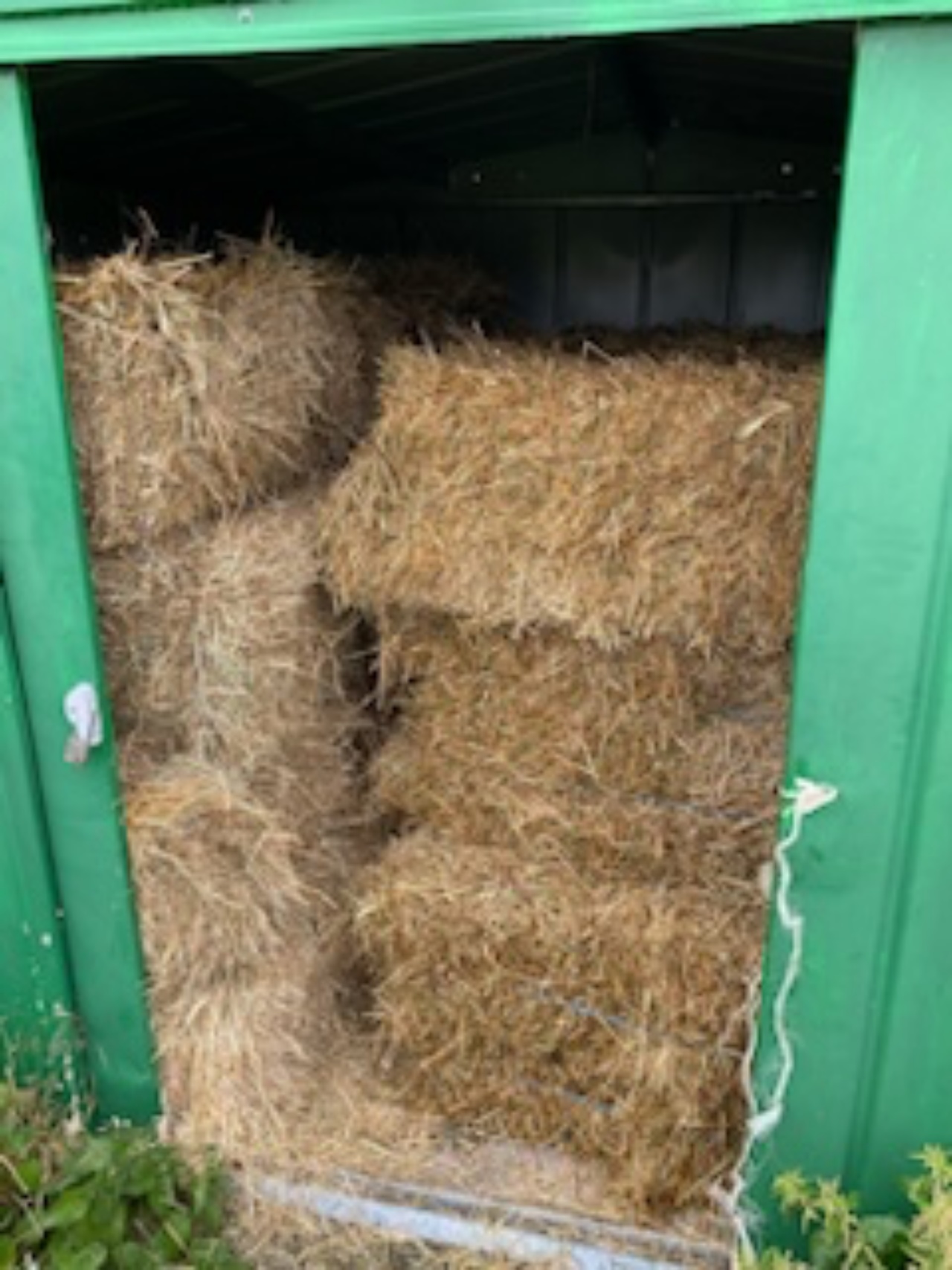
Some of the hay is retained by Langdyke as winter fodder for the sheep in case of hard conditions (26 bales stored away) – or for use as seating at the Annual Meeting if not used! The remainder is shared by the farmers as payment for their efforts. I like to think that this epitomises the Langdyke signature line – Nature, Heritage, Communities.
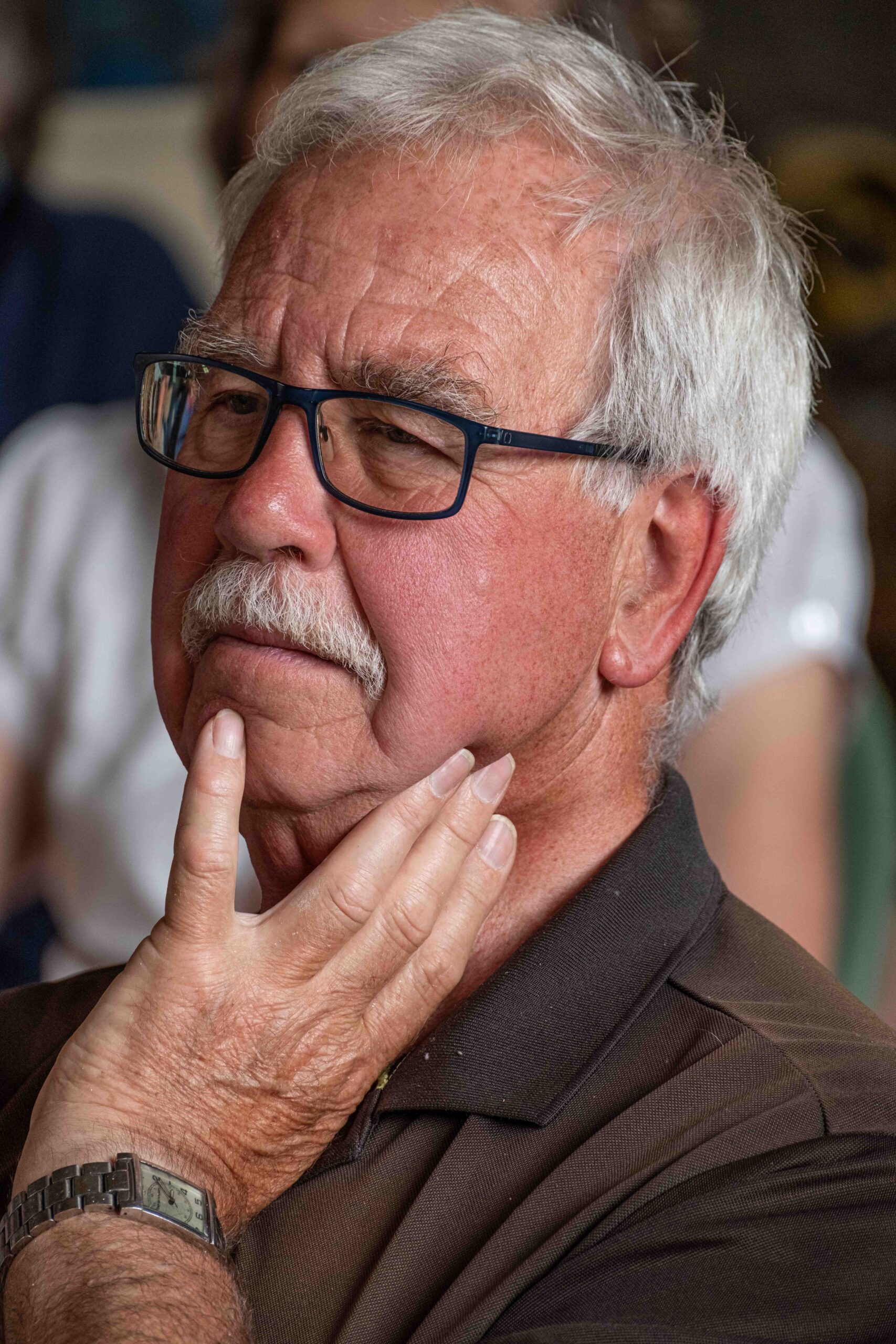
A final and personal bonus for heritage is that it gives me an opportunity to exercise my vintage Ferguson farm equipment (main picture. above). I mowed and tedded the smallest paddock at Etton – the average age of the kit (including driver) being 73.
I am working on acquiring a baler but that will bring the average age down!!