You can help with our search to record veteran trees across John Clare Countryside. Langdyke board member and ecological consultant Sarah Lambert explains the role you could play in this important project
John Clare lived in a landscape rich in old trees. In his writing he refers to ‘huge mossed oaks’ and recounts sheltering from a summer shower in a huge hollow ash tree
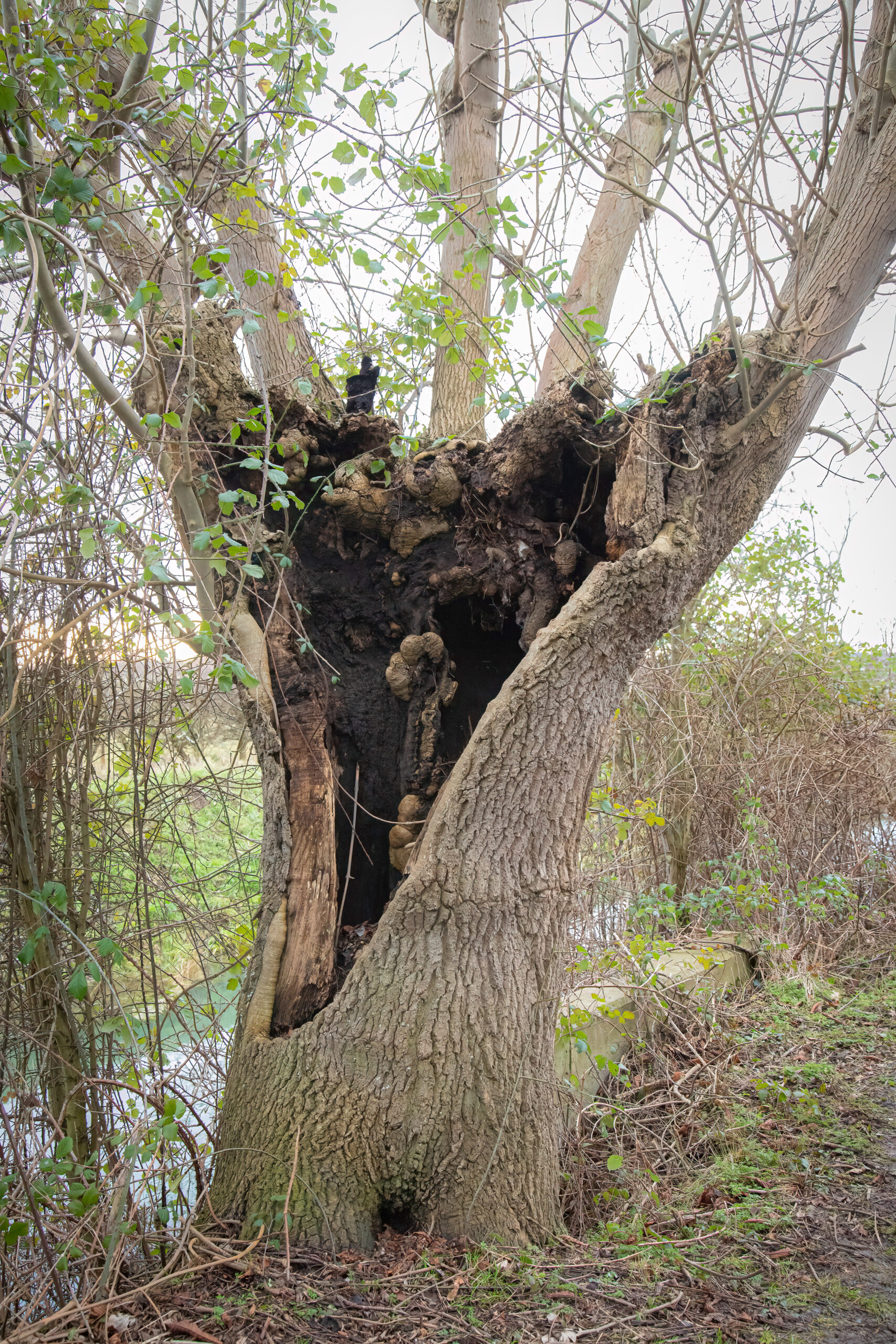
A hollow ash pollard next to Splash Dyke in Castor
How oft a summer shower hath started me
To seek for shelter in a hollow tree
Old huge ash-dotterel wasted to a shell Whose vigorous head still grew and flourished well
Where ten might sit upon the battered floor
And still look round discovering room for more
More than two hundred years later, the countryside west of Peterborough still has some magnificent old trees –stag-headed oaks line many field boundaries on the clay plateau, while the river valleys support aged pollard willows.
Many of the finest ancient trees are in Milton and Burghley parks; the former contains ancient oaks that might well be five hundred years old, mostly in areas away from public view.
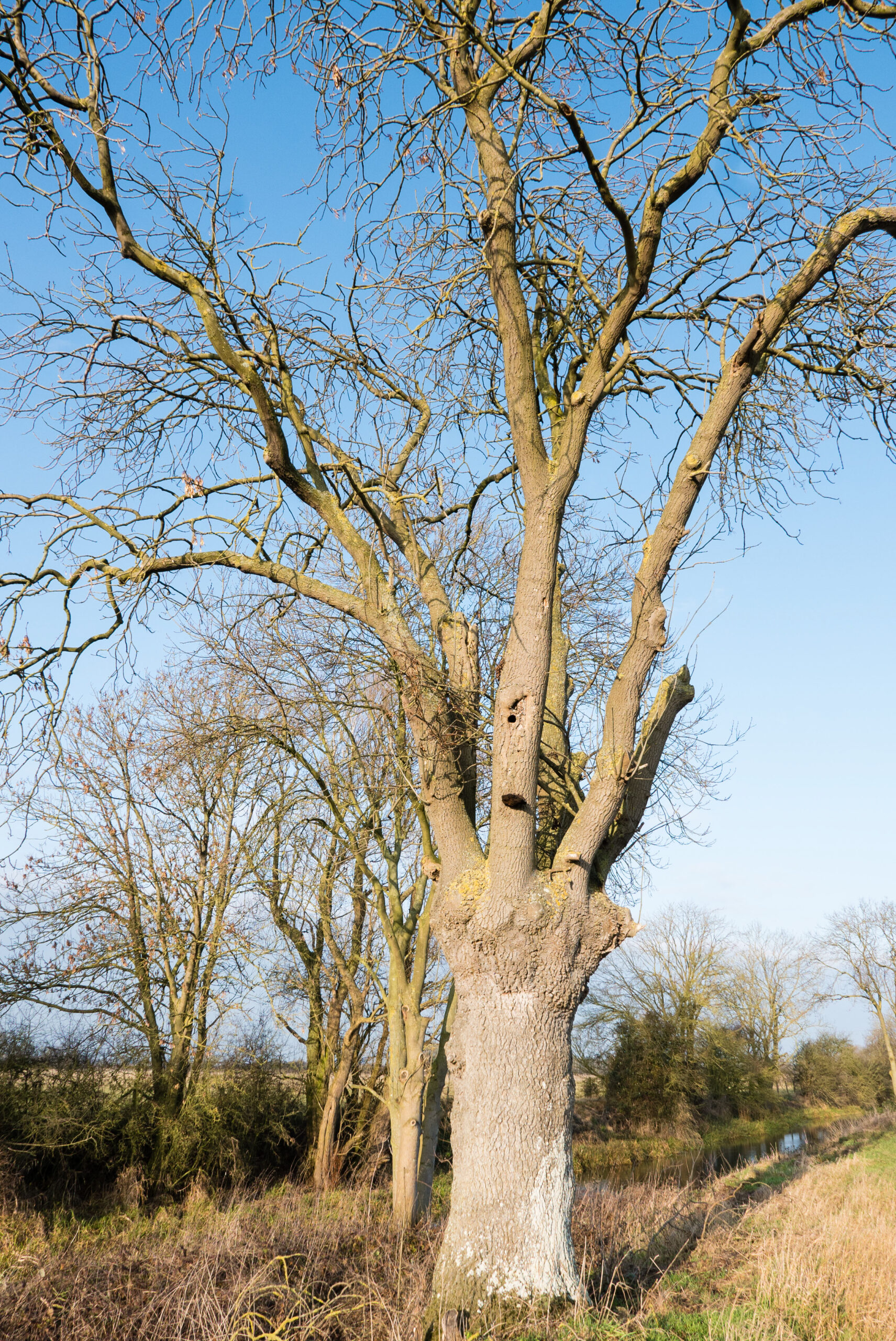
Pollard Ash in the Welland Valley at Maxey
Sadly, veteran ash trees are much scarcer, though a few exist here and there. The historical ecologist Oliver Rackham said old ash accumulate ecological and cultural value with age: “one 200-year-old ash can be a series of ecosystems for which 10,000 50-year-old ashes are no use at all”.
The 200-year-old’s holes and cracks are invaluable for beetles, birds and bats, its base-rich bark for lichens, mosses and liverworts; it is so packed full of fungi, insects, spiders that it hums with life.
The best time to spot trees of character is during the winter, when their leaves have dropped. Although we appreciate their cultural, aesthetic and biological value, we don’t have a good idea of where all the remaining significant trees are.
A veteran Oak in a Marholm hedgerow
Between December and April, Langdyke Countryside Trust would like torecord the locations of those extraordinary trees that just make you stop and stare, or which are of particular cultural significance within your parish.
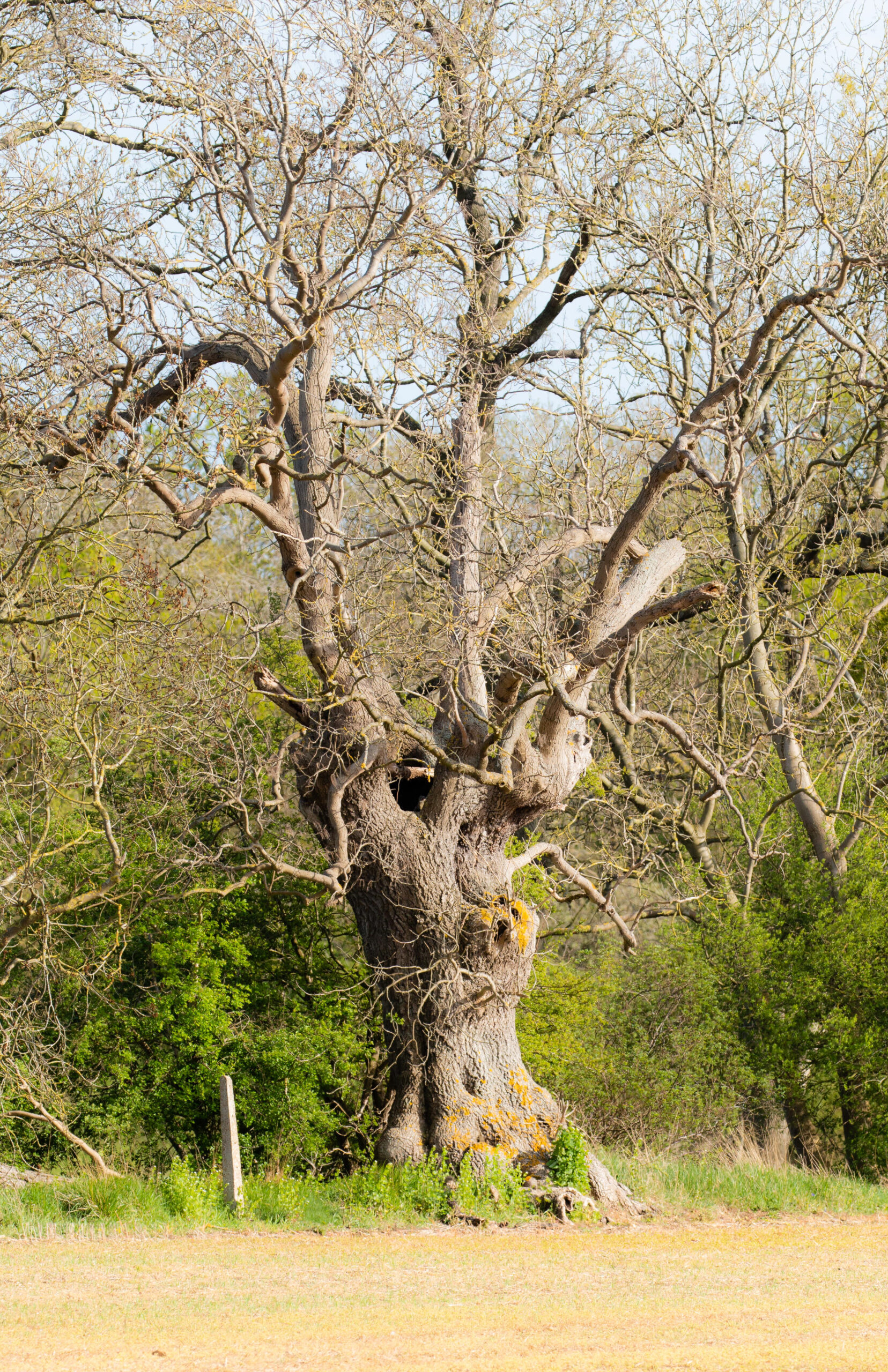
A veteran ash tree on the edge of Castor Hanglands NNR
Many will have large trunks, needing at least two people to hug them, but some may be smaller such as veteran hawthorns.They will usually have a range of features such as hollow trunks, rotten wood, dead and broken branches, peeling bark, nest holes in the trunks and insect exit holes. They may also show signs of past management, such as coppicing, pollarding or former hedge-laying.
While you’re out for walks this winter please photograph and record the locations of any remarkable trees that you see, and share them in the Langdyke Facebook Group.
If you wish to record more information about the trees, including species and girth size, that would be great. You can also enter this information into the Woodland Trust’s Ancient Tree Inventory https://ati.woodlandtrust.org.uk/ which is still missing many of the old trees in the John Clare Countryside area.
An ancient willow next to the Rover Nene in Bluebell Wood
Your information will allow us to plot a map showing the locations of our most significant trees, to help us ensure they’re cared for in the future. We’ll also be able to identify areas where future generations of parkland and hedgerow trees are needed.
And I’m sure all our members will really enjoy viewing your photographs of these characterful features of our local landscape!
Main picture above this article shows a group of veteran oak tres in Stamford Road Parkland CWS, Marholm.
Cookies on this website.
This website uses Wordpress and a numer of plug-in programs. Some use cookies to improve your experience and to track traffic. We'll assume you're ok with this, but you can opt-out if you wish. Cookie settingsACCEPT
Privacy & Cookies Policy
Privacy Overview
This website uses cookies to improve your experience while you navigate through the website. Out of these cookies, the cookies that are categorized as necessary are stored on your browser as they are as essential for the working of basic functionalities of the website. We also use third-party cookies that help us analyze and understand how you use this website. These cookies will be stored in your browser only with your consent. You also have the option to opt-out of these cookies. But opting out of some of these cookies may have an effect on your browsing experience.
Necessary cookies are absolutely essential for the website to function properly. This category only includes cookies that ensures basic functionalities and security features of the website. These cookies do not store any personal information.