
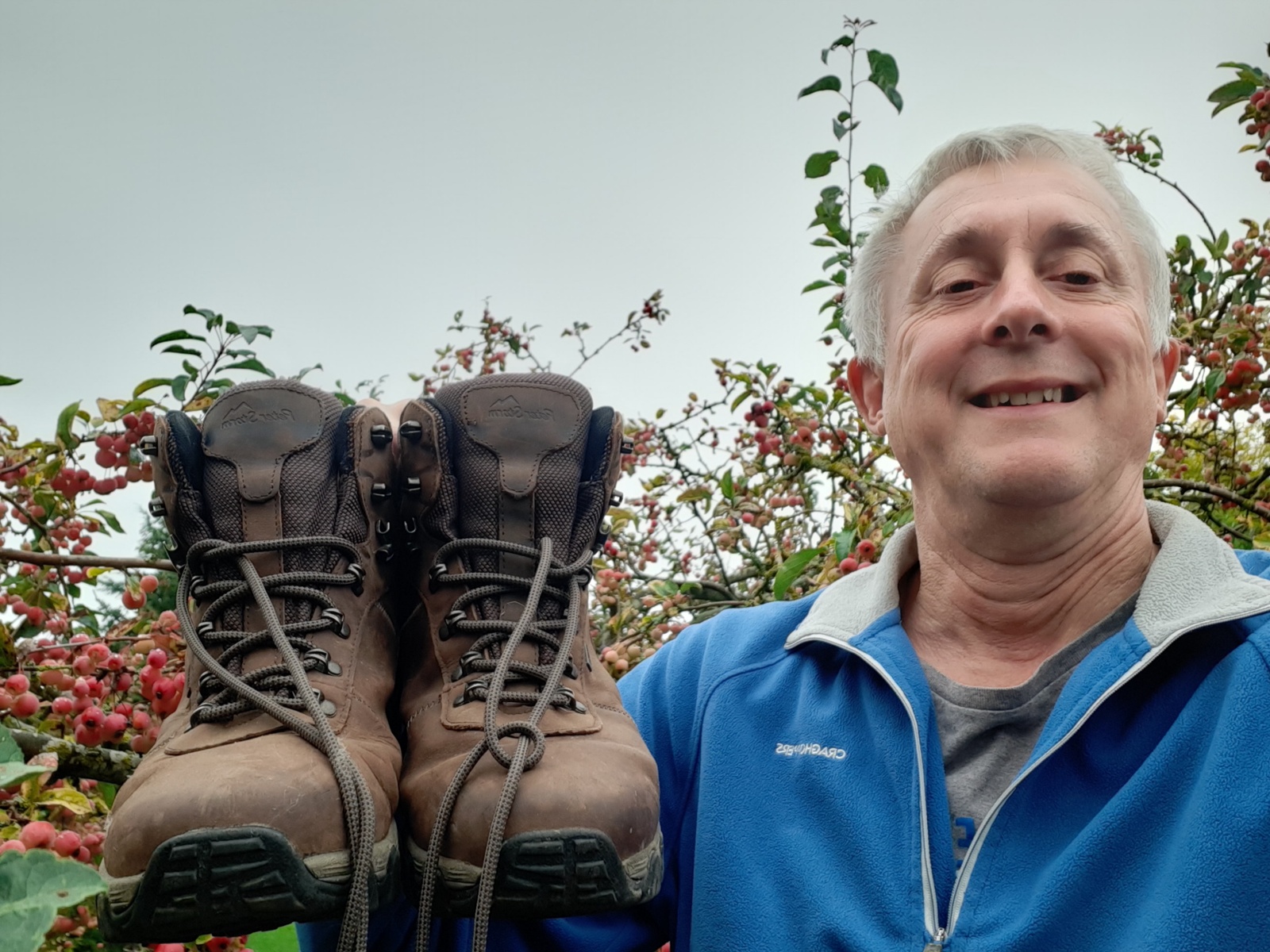
Langdyke trustee David Alvey decided to spend a day walking 30km across John Clare Countryside – all in aid of charity. Here he writes about his experience ….

Through some strange error of judgement I found myself signing up to the 30km Big Wild Walk challenge for the Wildlife Trust’s 30 per cent of land managed for nature by 2030. Almost immediately afterwards Langdyke Countryside Trust launched its appeal to fund the project at Christ’s College Pits. As this land purchase directly supports the Wildlife Trust’s aims it seemed appropriate to link the two and so I was publically committed to the adventure.
A date was picked, the event publicised and sponsorship started to come in so there was no turning back even if I did come to my senses. Stepping up from a daily 4-5km dog walk to a 30km day of walking was really happening and the route planning commenced in earnest with help from Ian and Claire.
This walk not only provided an opportunity to publicise the Langdyke and Wildlife Trusts two appeals, but also provided the space for me to spend time in the natural world without a fixed agenda.
Able to consider what I was seeing, what this seemed to tell me about our local environment and how this all might fit into where the local, national and world environment was heading. Here I try to capture some of what I saw and thought about.
I decided to corrupt the title of J.R.R Tolkein’s The Hobbit to The Hobble – appropriate as I definitely feel those of us interested in the natural world are still hobbling along trying to work out what we can and should do about its current demise. Perhaps too often we are like Smaug (the dragon) sleeping on our piles of material worth, guarding our “precious” and not noticing the natural world around us change at a rate that means, if not in our generation, certainly in that of our children and grandchildren it will be very different.
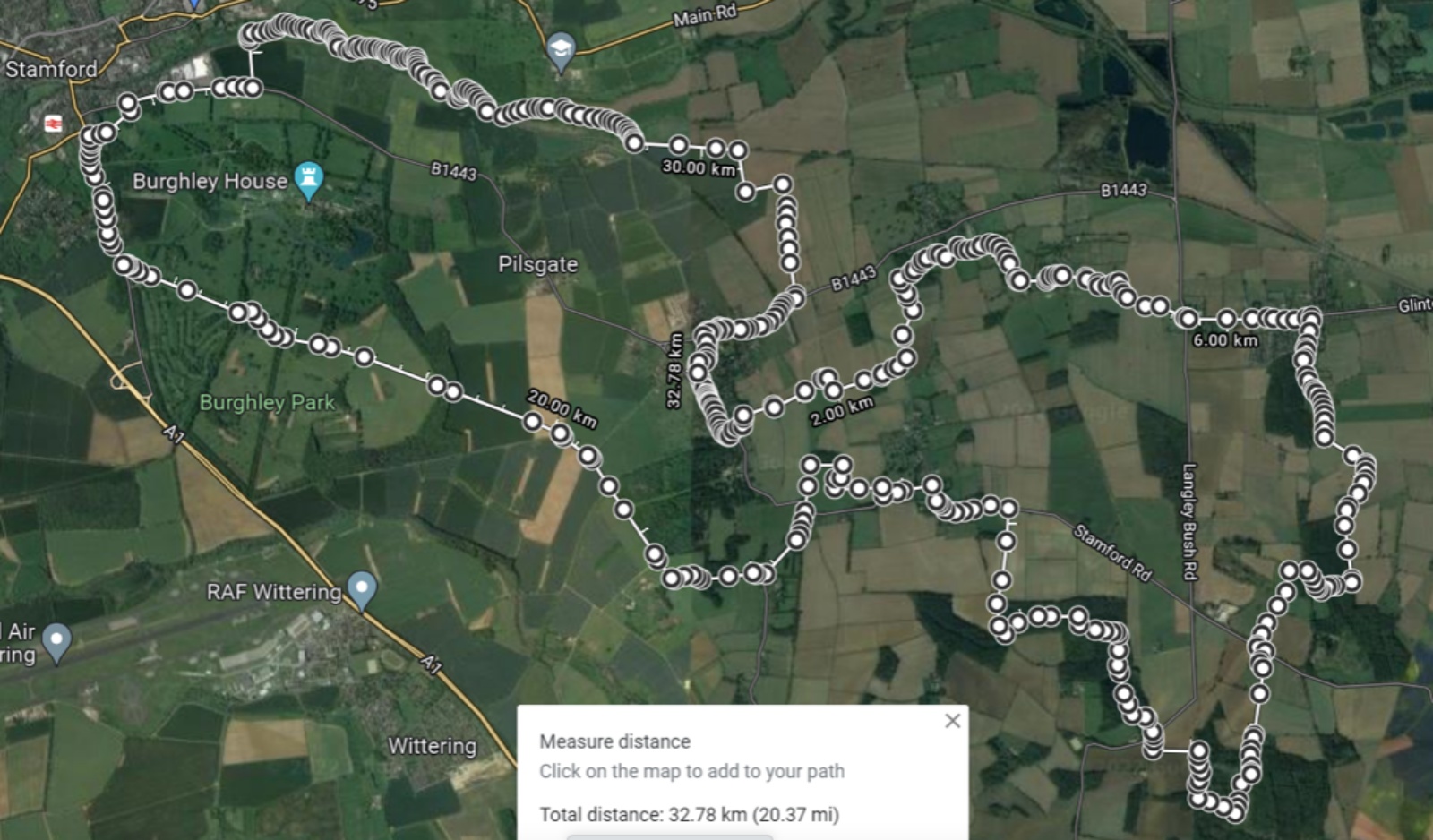
 Friday October 28th arrived and the planned 7:30am start from the Hills and Holes (pictured, left) meant getting organised, the dogs sorted and being out of the house at 7:15am. The Feral Pigeons were already lined up on the barn opposite my house to wish me well. Starting out from one of the area’s most renowned national nature reserves, (SAC, SSSI and almost every other designation possible) felt like a suitable way to start a long day exploring the wonderful John Clare Countryside.
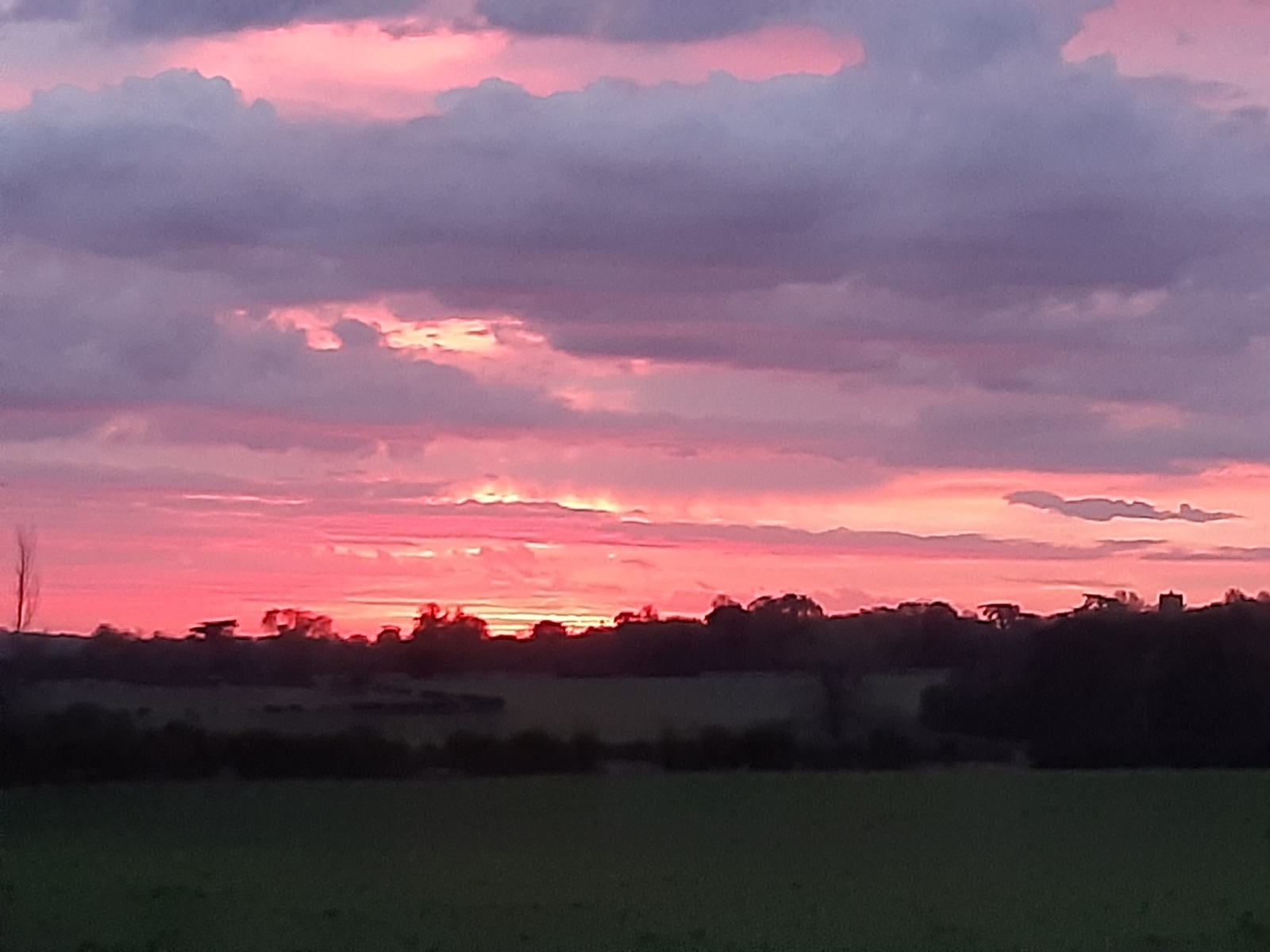 Fortunately the predicted rain held off and as we set off across the cricket field in Barnack we got an early reward with a beautiful sunrise over Ufford (right) followed shortly by a distant view of a murmuration of some 500 plus Starlings heading purposefully west but still creating some sinuous patterns. One disappointment was it seems I was too early for the usual “hopscotching” of Yellowhammers along the hedge line in front of me as I walked towards Bainton. Crows fed in the stubble fields joined by Jackdaws but no Skylarks were on the wing at this early hour.
 We soon joined the Torpel Way for a short stretch deviating from the shortest route to avoid the stile, just as you come into Ashton, to preserve both my health and safety plus possibly that of the accompanying Labrador I would have had to carry over it!
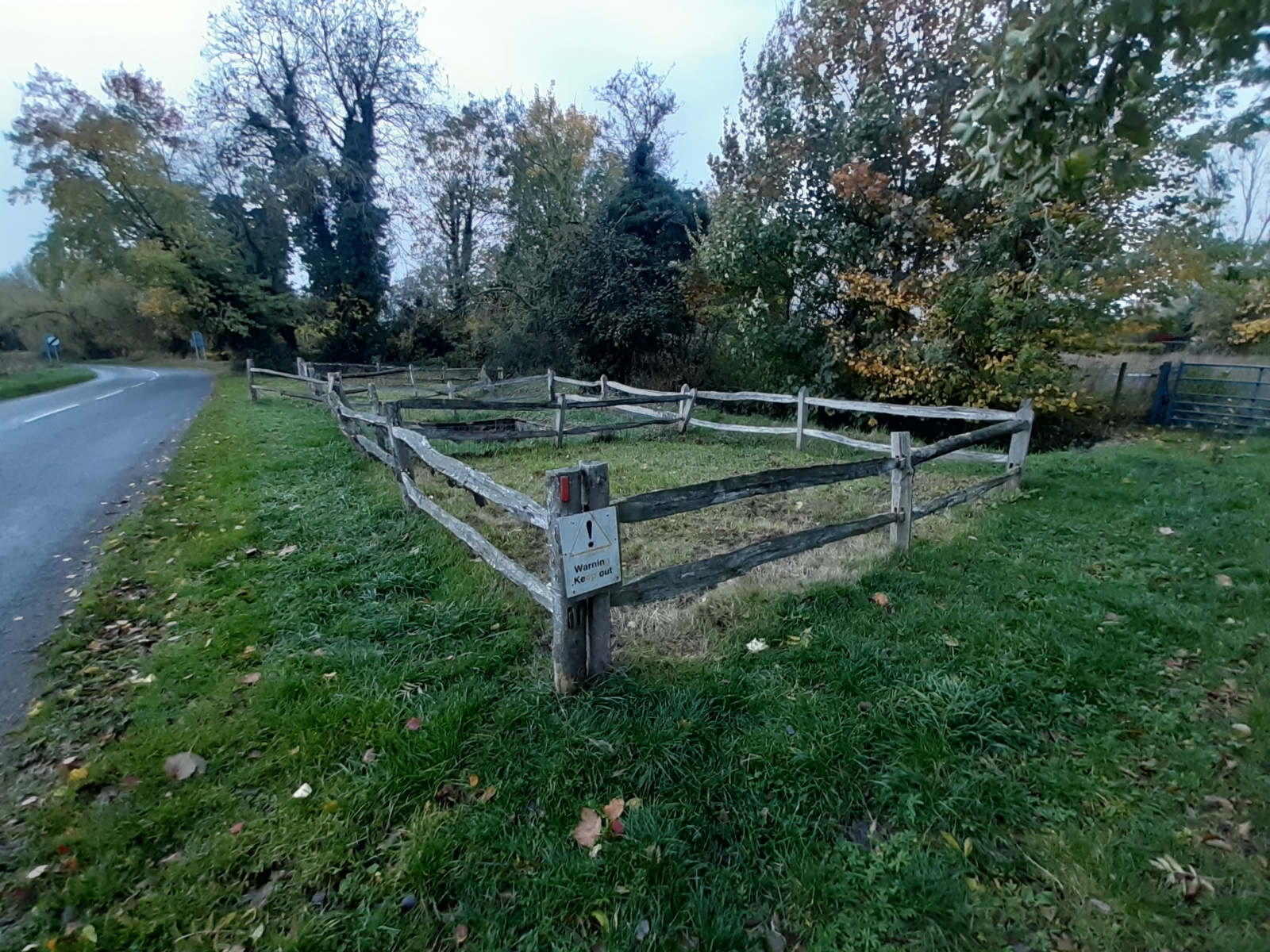
The benefit was we walked through the Bainton Conservation Area and past the moat of Bainton “Castle” as well as the ancient sheep wash (pictured, below) shortly due for some restoration work thanks to the Bainton and Ashton Parish nature recovery group and the John Clare Countryside Team.
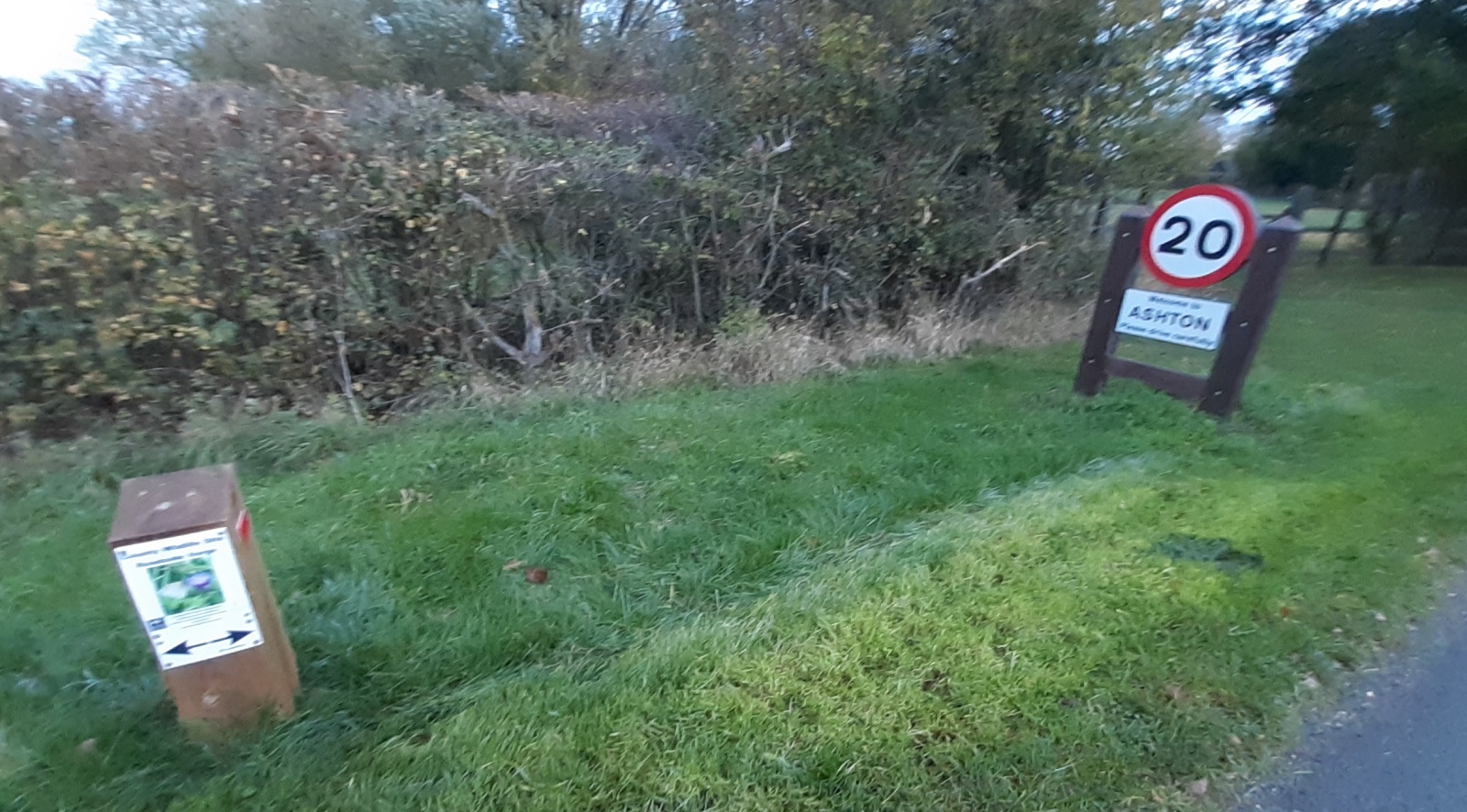 Along the green lane into Ashton signs were up protecting the road verges to give wildflowers the chance to thrive under specifically tailored grass cutting regimes organised with Peterborough City, the contractor Aragon and the JCC road verges sub-group.
 Heading out of Ashton and now back on the Torpel Way we naturally ended up at our first Langdyke reserve of Torpel Manor. At this stage only the call of a Thrush, a Robin and a Wren from the scrub alongside the path had been noted but on Torpel the inevitable Red Kite circled to see who was out this early.
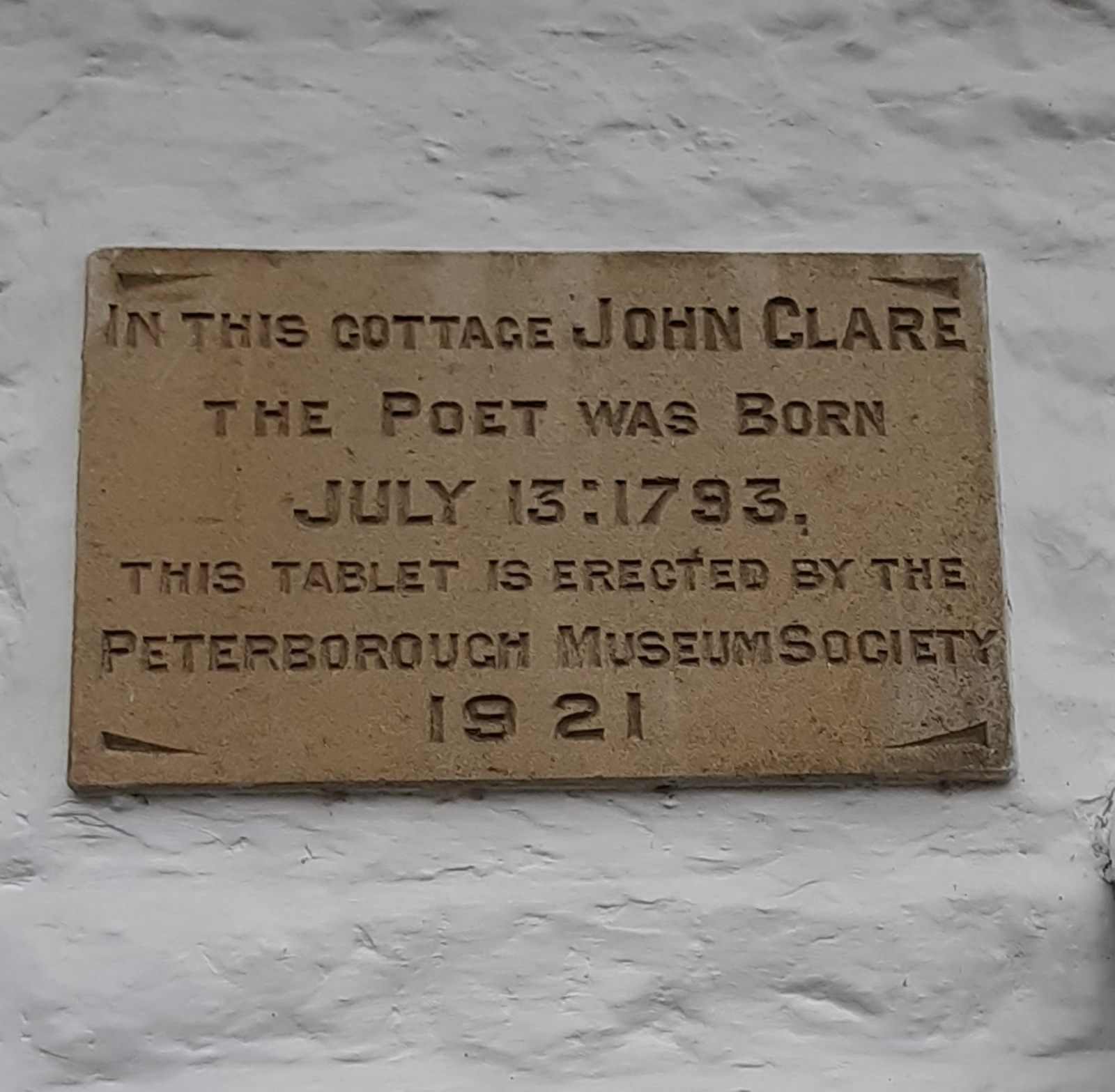 A walk down the road in Helpston to John Clare Cottage meant many greetings from fellow dog walkers and a meeting with Steve, my first human walking companion of the day. A marginally early arrival meant I had time for some refreshment a pre-prepared bacon sandwich and a cup of coffee from the flask. Much needed even if the dogs, much to Steve’s amusement, devoured the large piece of bacon which fell out of the sandwich. The dogs were collected by Dawn and returned home at this point for a well earned rest, resisting the temptation to join them and with Steve to keep me on the straight and narrow, we headed off south.
A few Crows, Wood Pigeons and very little else, other than a car and cyclist heading the opposite way up the farm track distracted us from a pleasant conversation, although 1km down the road I realised having paused my phone’s tracking app. when I stopped, my tracker now showed a very direct “flight south” an error that means I am sure I had covered a lot more distance than the phone showed. A passing horse rider as we walked alongside the woods was the only significant sign and sound of life.
The absence of bird song and even calls, whilst perhaps expecting it to be more limited at this time of year prompted obvious thoughts about the sixty year old book Silent Spring by Rachel Carson and also the recently published, and on my birthday books list for the end of this month Silent Earth by Dave Goulson. How close are we to these becoming a reality? Surprisingly no deer appeared at this point and (spoiler alert) for the whole walk!
Emerging onto the road at a point where I am sure I recall as a child, in the very early seventies, you used to be able to park on some heath land and walk into the woods. This was during many of my parents weekend explorations of the countryside having moved out of London in 1969 to Peterborough when Westwood was the new housing. At the time the new townships of Werrington, Bretton and the Ortons plus all the parkways were just being designed by Peterborough Development Corporation along with the still threatened Castor township. I must dig out those old documents sometime and see how much matches reality.
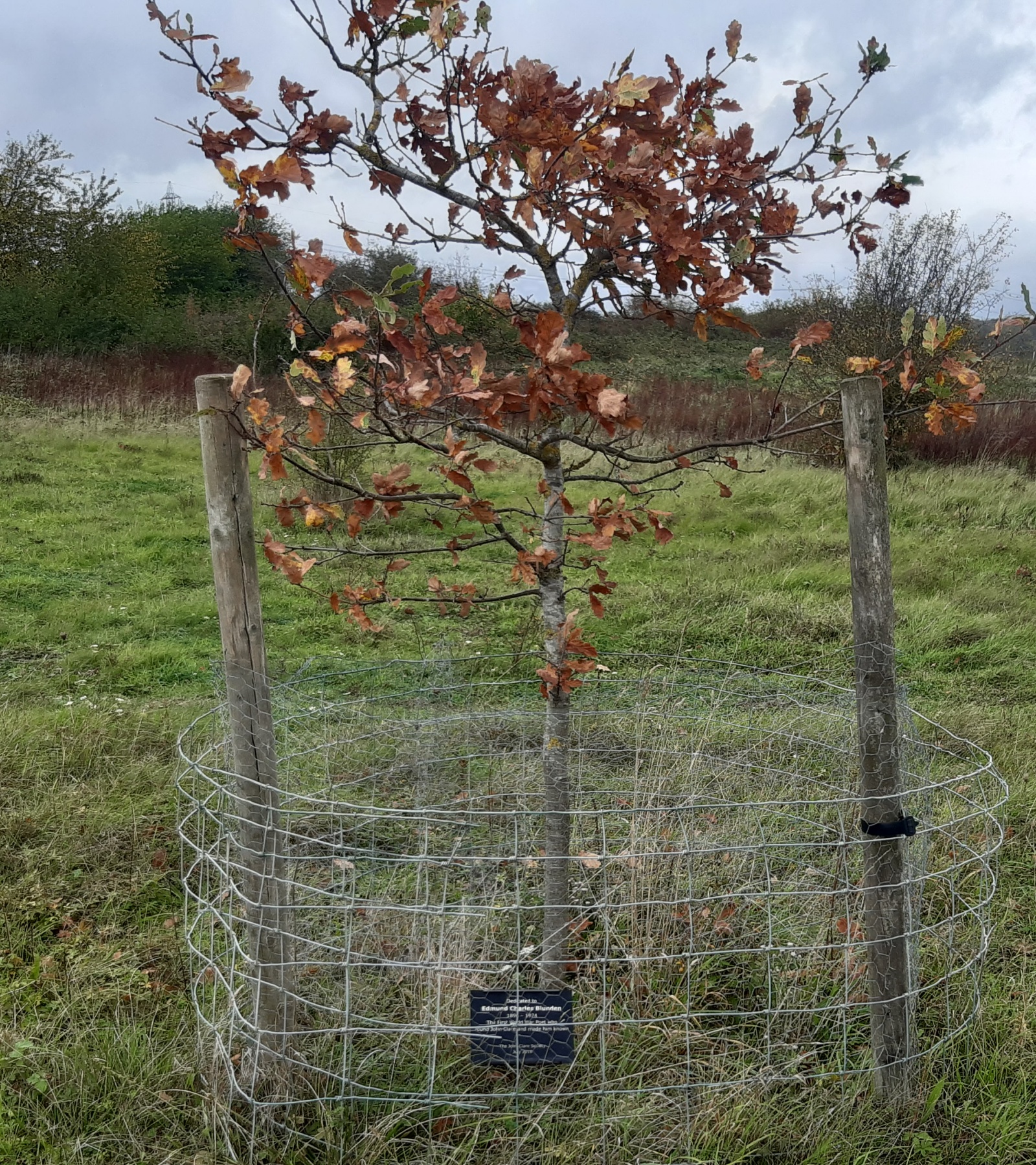 Crossing the road we joined the path down the side of Swaddywell, the second and final Langdyke reserve of the day (the eastern reserves were just too far away for a 30km circular walk). The protection of oak saplings both planted on the reserve (pictured) and self sown alongside the footpath was noted and should give pleasure to generations to come. This reserve prompts me to remember that nature will adapt and recover from our actions. It will survive and come back in an interesting and different way. Look at the fact that most if not all of our local nature reserves have been created in the first place by nature re-colonising in a very different way land that we have “wrecked” by industrial activities. Quarry’s, landfills sites, mineral extraction etc… but it does require space and time something we seem very unwilling to give it now days where we want to have instant results and be in control of everything.
So we arrived for the official coffee break at Willowbrook Farm cafe where Liz joined us to chauffer Steve home after a pleasant break and coffee’s all round.
A short walk to Castor Hanglands with a few Collared Doves seen along the way started off stage three. This stage included a loop across the heath and into the woods.
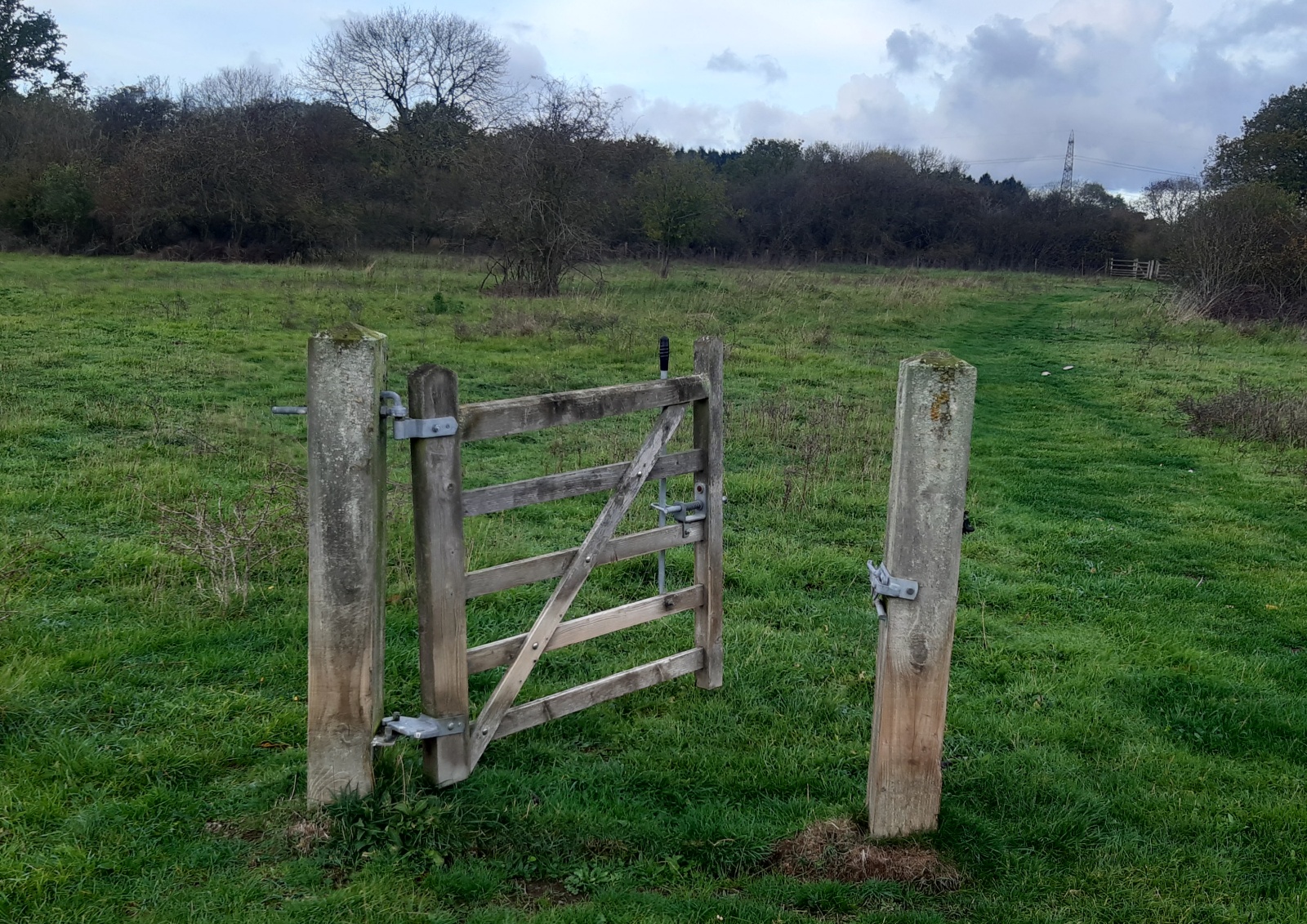 I was reminded on the way the importance of always leaving gates as you find them so I ensured this gate closed properly behind me. The diversity of fungi found and regularly reported on Langdyke’s Facebook page, was evident even on this brief sojourn across the reserve. The bird song but not the visibility of them, increased as I walked through the wooded section.
 After after another quick refuelling break I headed off to Southey Woods. The first wild mammal of the day crossed my path as a Grey Squirrel scampered up a tree close by and a charm of Goldfinches provided the first close encounter with birds soon to be followed by a small flock of mainly Blue and Great Tits hunting out food in the scrub. Whilst blackberries have finished the rose hips, hawthorn berries and a fine example of Spindle (pictured, below) reminded me that this year seems to have been good for wild fruits despite the high temperatures that affected so much else.
Exiting Southey Woods towards Ufford provided a distant glimpse of the first puzzle of the day, binoculars revealed a distant bird in the long grass of the field margin ahead. The size and shape of a pheasant was only discounted in my view by the colouration a much lighter russet/ orange plumage that ruffled slightly in the wind while the bird remained still and crouched. Carefully moving along behind the hedgerow I was hoping to at least catch a glimpse as it took to the air and expecting the easily recognised cacophony this would be accompanied by confirming the colouration was just an effect of the light, I thought through the other options as I slowly progressed to the next opening in the hedgerow. Pheasant sized birds? With robust black beak? Russet coloured plumage? Emerging back into view I was pleased to see the bird still on the ground in the long grass, a slow raise of the binoculars so as not to put it to flight and adjustment of the focus. All the careful thinking through of options and the slow approach and with the aid of the binoculars revealed the answer to be a small broken branch from the nearby oak tree complete with leaves/plumage.
 So let us move on quickly to lunch at The White Hart in Ufford. Refuelled after the halfway stop I set off down the hill towards the Walcot Estate, unfortunately not having the time to walk down the main road in Ufford to inspect another John Clare Countryside project of the new mixed orchard planted opposite Ufford Hall which thanks to the diligent efforts keeping it watered had largely survived the drought and should provide a good show of blossom next spring.
The fields on the west facing slopes provided the first pair of Magpies and more mixed groups of Crows and Jackdaws. Not sure where the usual posse of rooks have gone to from the rookery in the centre of Barnack. Following the old railway line through the remains of Ufford Bridge Station not quite at its historic best now days, and along the Lime tree lined road into the north end of Southorpe. A very small community but with three SSSI’s must qualify it as one of the highest ratio of SSSI’s per capita of any parish? T
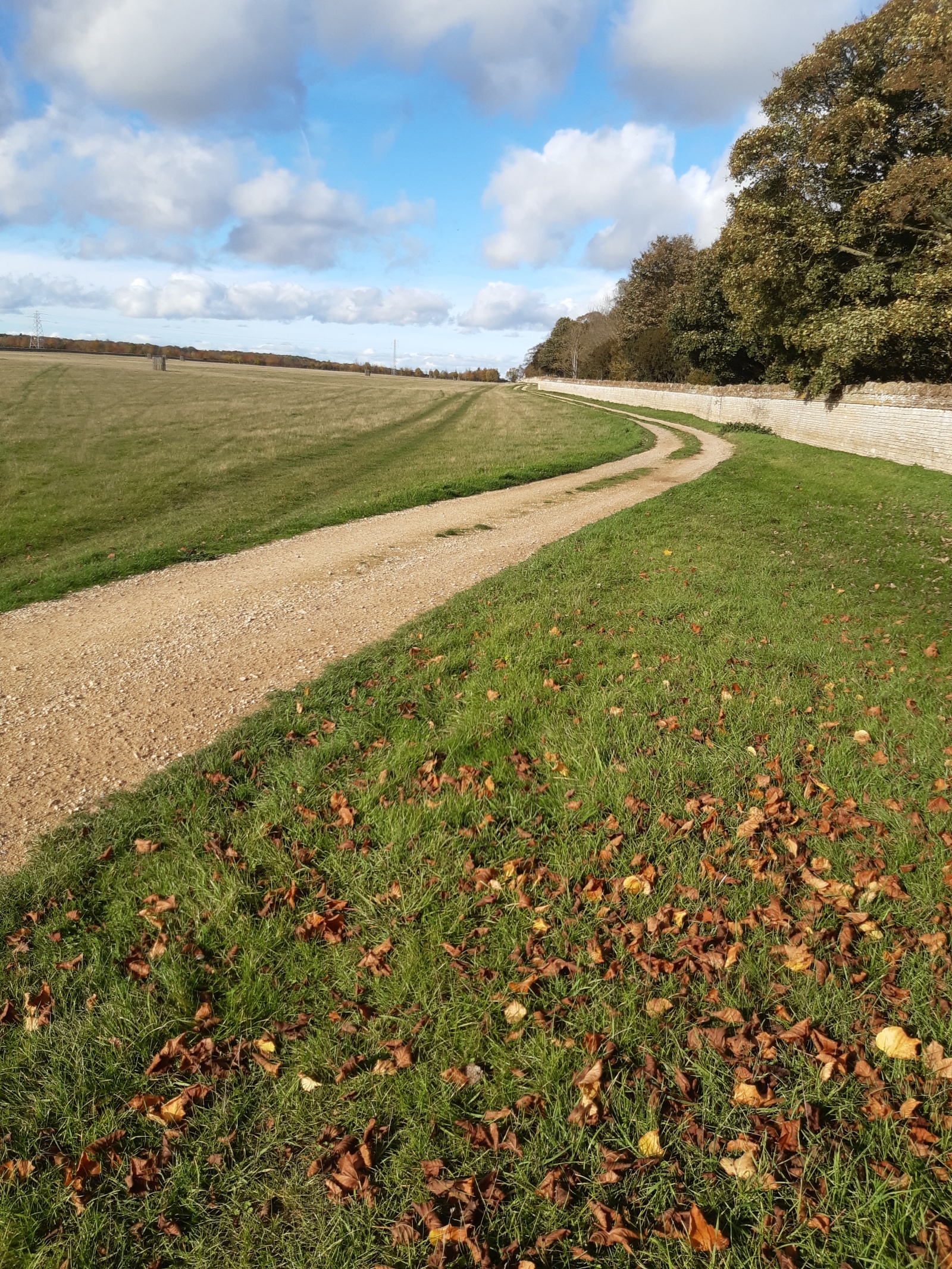 The permissive footpath through the woods enabled me to join the old route of Ermine Street (also Hereward Way at this point) and walk in the footsteps of the roman legions as they headed north almost 2000 years ago. It was a nice change that the limestone grasslands on one side and the county wildlife site of Walcot Hall on the left behind the high stone wall was free from noisy pheasants now that Walcot no longer run a shoot but the constant hum of traffic along the A1 reminded me of just how much life has returned to normal after Covid.
The number of conversations I had with people about how the pandemic would change our way of life seems a very distant memory reducing many things that are having a direct impact on our countryside and bio-diversity. Like for so many those ideas and promises have disappeared. Two days after the walk I joined with 86,000 others at Wembley Stadium to watch a game of American Football as well as my travel the air miles racked up by the mammoth team squads flying over will not have been carbon neutral!
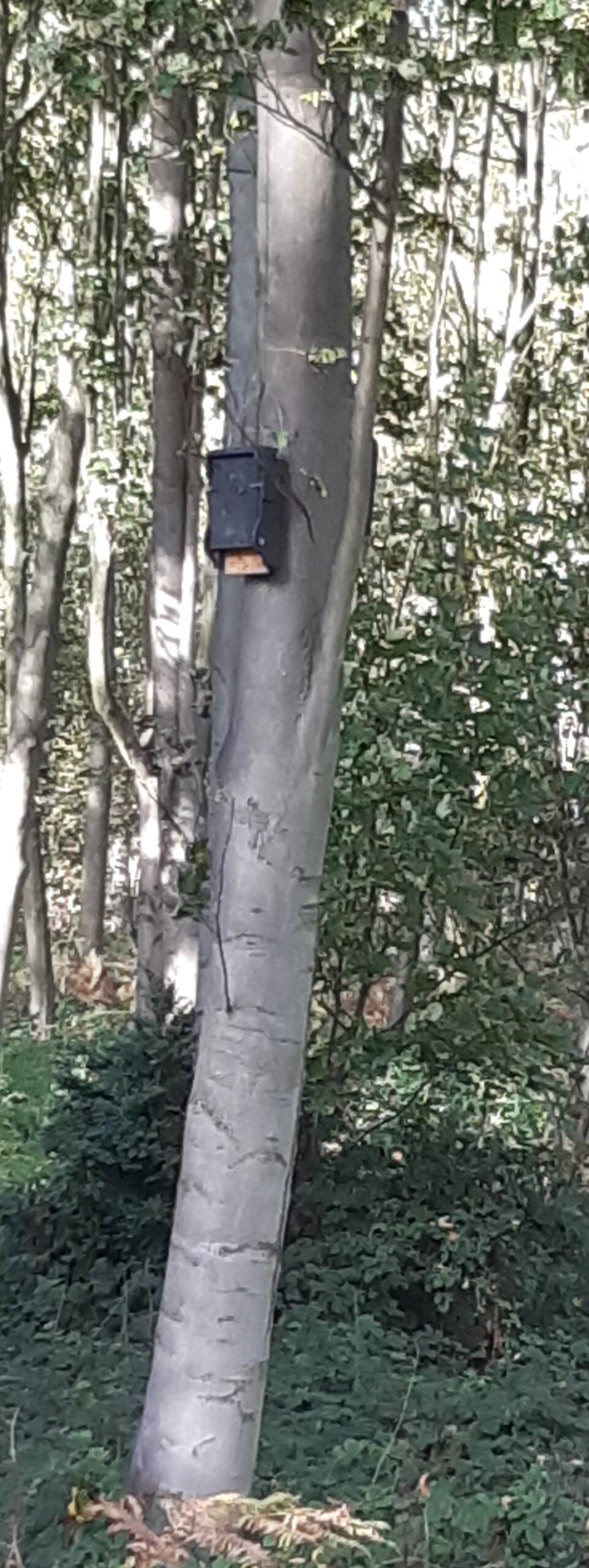 Crossing some arable fields put to flight the first Skylarks of the walk but only a quick low flight and no enchanting song. Further along the route of Ermine Street reaching the edge of Burghley Park in the woods are the bat boxes recently checked out by Antony and myself and found that one contained a small maternity roost of 1 male and 3 females of Soprano Pipistrelles. The straight line of the route followed across two fields and over a small bridge in to the parkland at the rear of Burghley House. As well as providing an unusual view of the rear of the house, evidence of the annual horse trials in the form of one of the permanent fences (pictured) lay next to the route.
There followed some more difficult to negotiate stiles over electric fencing and out onto the road down to the golf club clubhouse. It was interested to see how little attention the Black-headed Gulls paid to the golf balls bouncing along between them as they fed on the grass of the fairways.
 The final break for a coffee in the clubhouse finished with the delivery of the two dogs to rejoin me for the last stage of the walk.
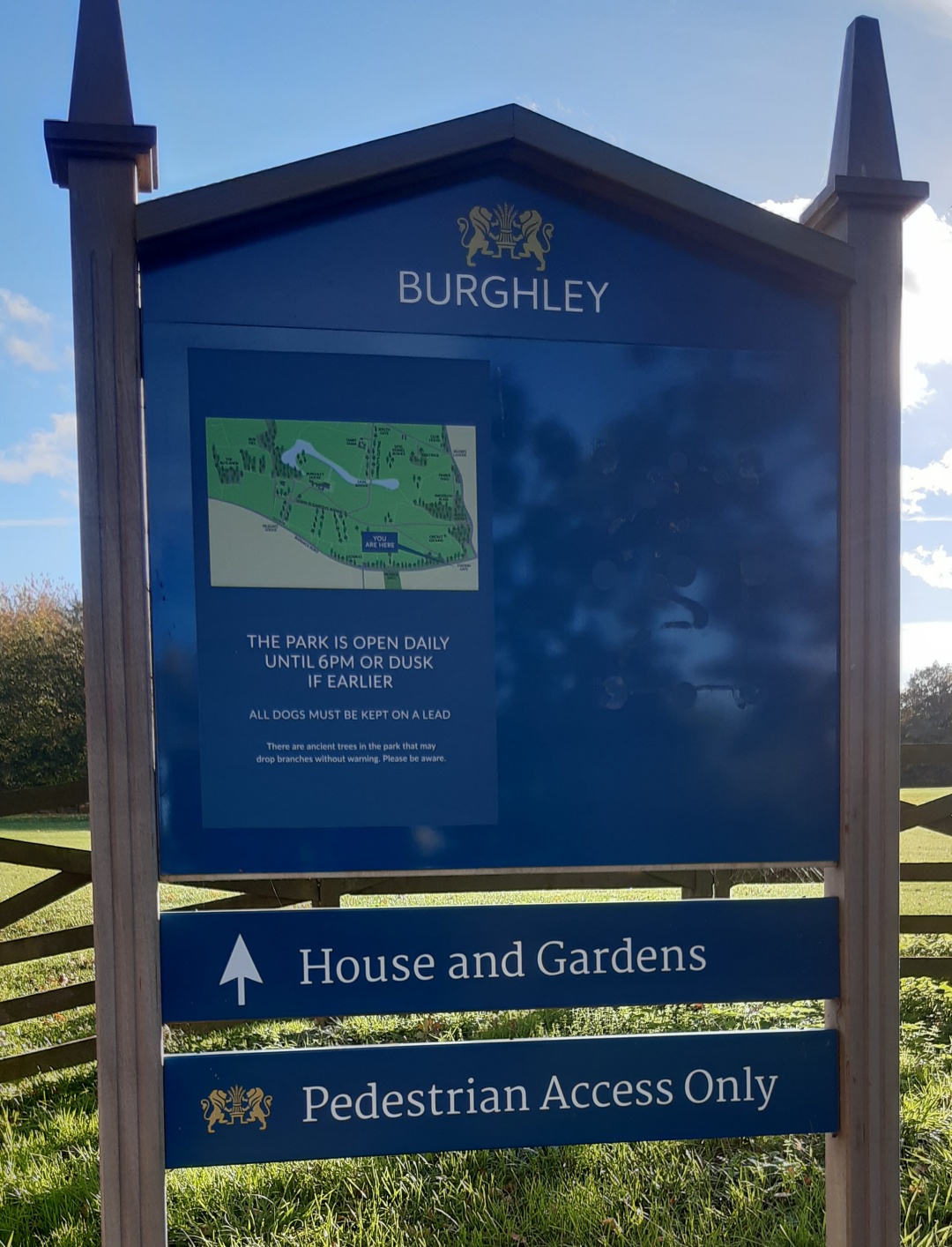 This final and longest leg commenced with meeting up with Richard and Lynsey at the edge of public section of Burghley Park. A brief walk across the angle past the cricket club and Princess Diana memorial garden saw us leave the park for a short walk along the pavement adjacent to the road until we left Stamford and turned right up the bridleway to cross the railway and come to the river Welland.
The open access meadows along the south bank of the river (pictured) brought the opportunity to see a few different birds with a couple of Little Egrets and numerous Moorhens adding species to the growing list.

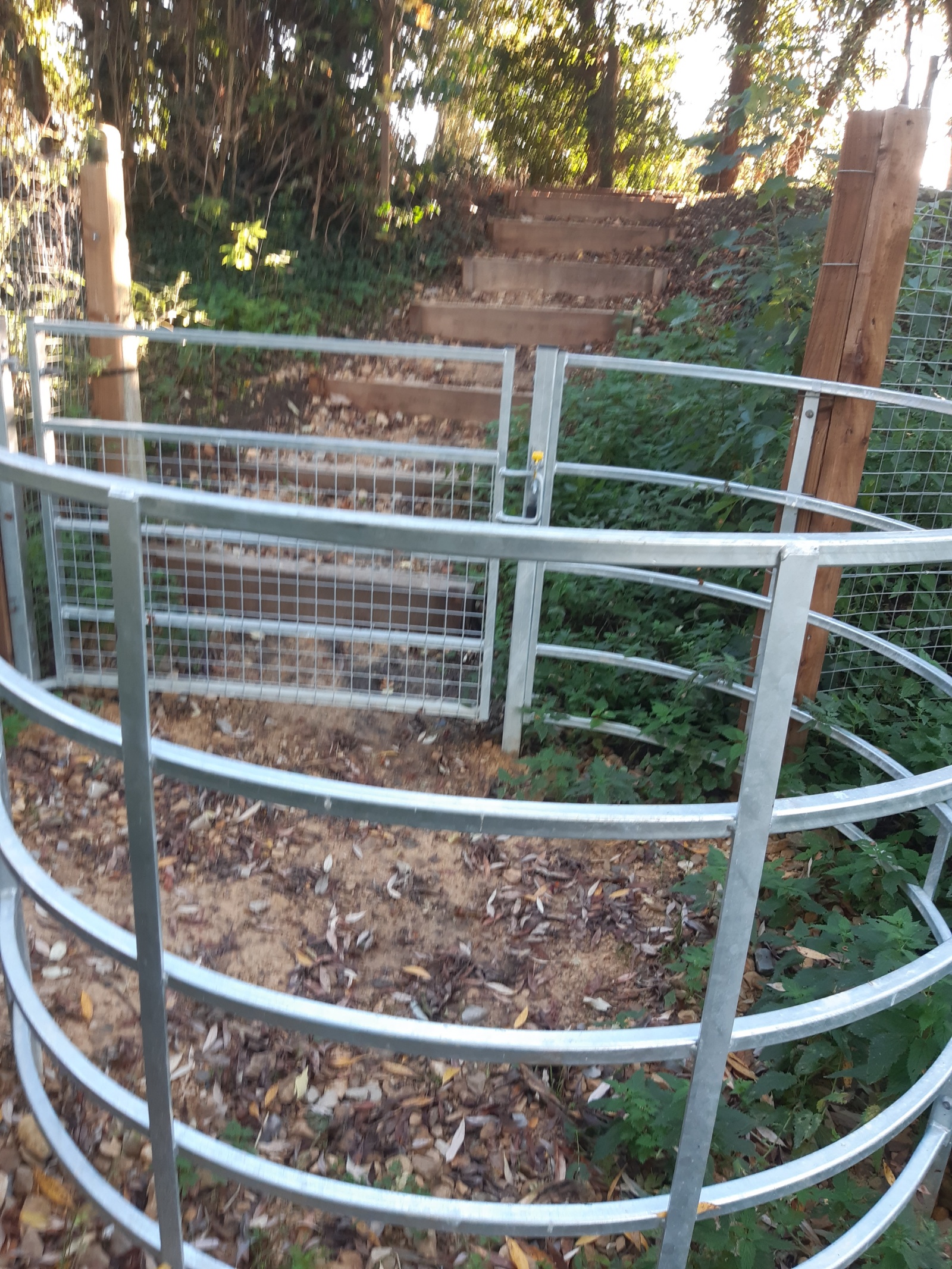 At the end of the meadows the gate and steps installed as another John Clare Countryside project (pictured) allowed an easier access back onto the Torpel Way than having to scramble over the fence and up the steep bank of the disused railway embankment. Interesting to see here the Peterborough City Council signs marking the route some 250m inside Lincolnshire, perhaps as a remnant of the old county boundary which still has interesting deviations from what would be assumed as the course of the Welland River but actually follows the old course of the river, now nothing more than a semi-dry field drain. This means that a part of Barnack Parish is cut off by the railway and the meanders of the Welland from the rest of Peterborough and can only be reached by passing through South Kesteven.
Along this section of the Torpel Way further work by the John Clare Countryside team with permission and considerable logistical help from Burghley Estate has enabled four ramps to be put in situ to allow the woodland that fills two meandering loops of the river to be accessed and provide excellent riverside walks (pictured, below) as part of the Welland Valley nature recovery project. 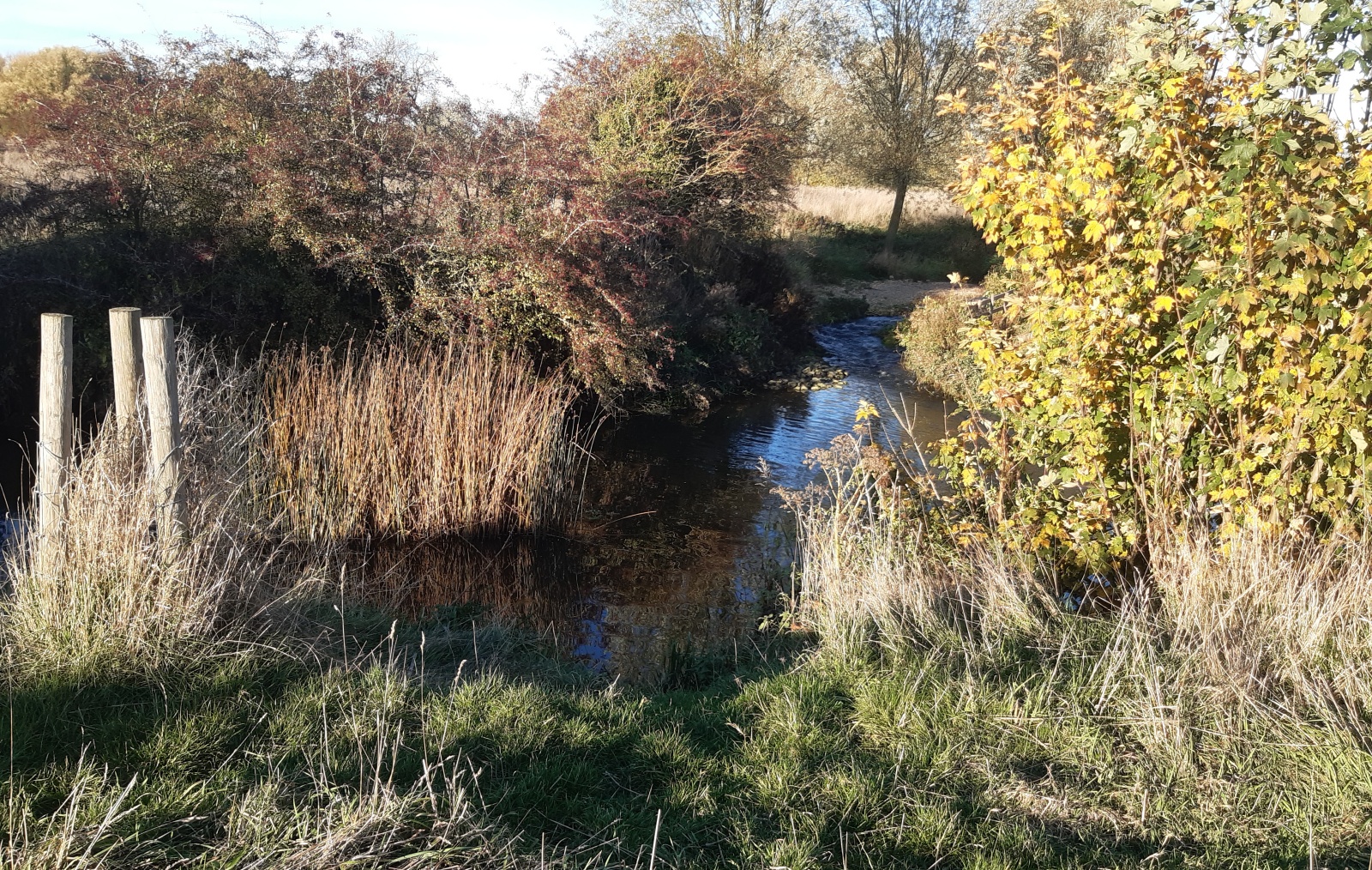
Leaving the river and negotiating the first field to be entered with grazing cattle and calves did mean a slight dash along the roadside with the dogs up to the level crossing on the Uffington to Barnack Road. The presence of a manually operated level crossing with a manned signal box with trains running at roughly four an hour still seems to hark back to a distant past. Two trains heading in different directions passed through while we waited for the signal and to descend and open the gates the visual impact of 30 plus containers being hauled presumably between Felixstowe and the West Midlands or North West England highlighted just how much of our goods and materials are transported many thousands of miles around the world to satisfy our demand for stuff.
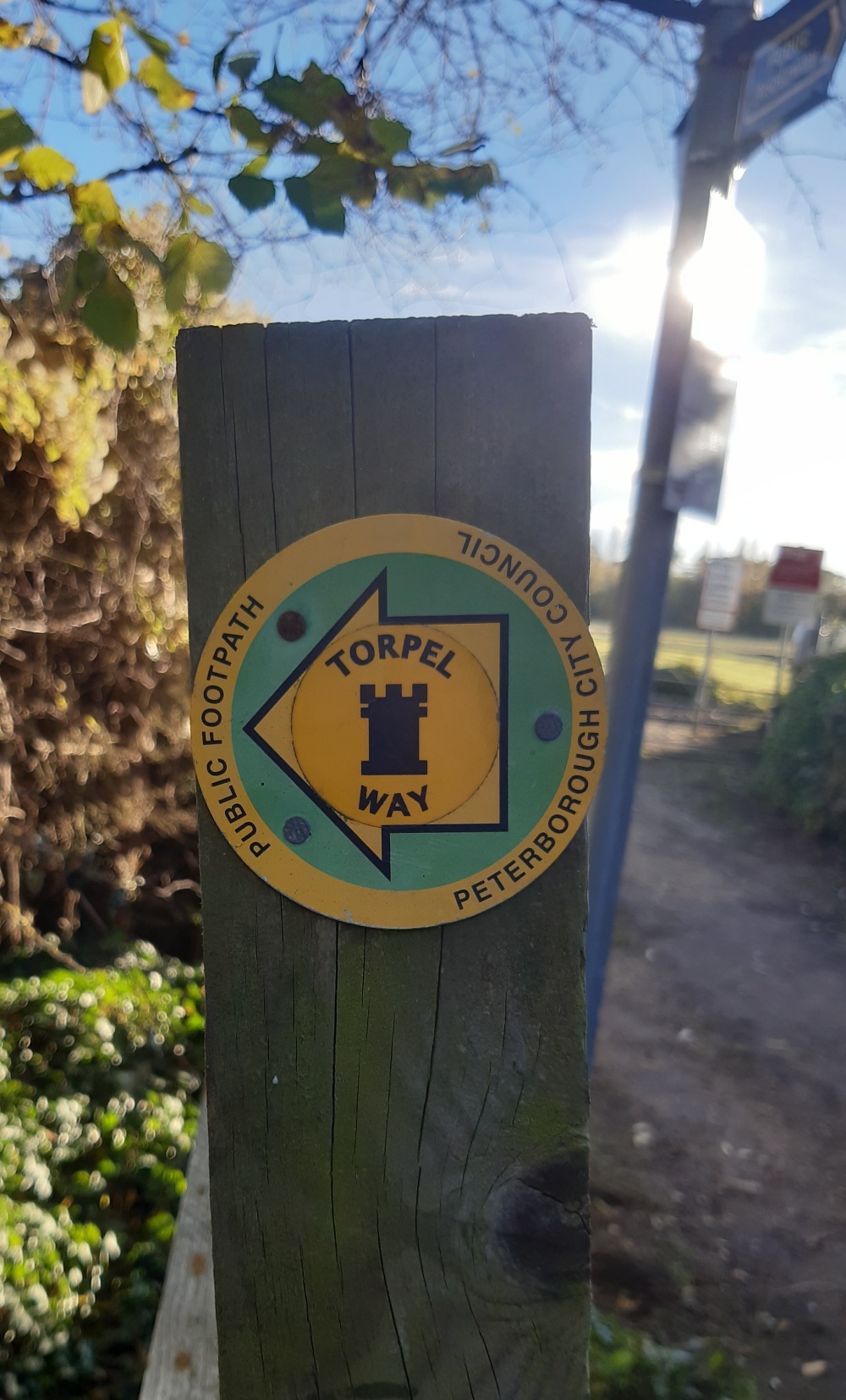 As the gates opened we quickly headed across and onto the final stretch of the Torpel Way parallel to the rail line before turning at right angles and heading south toward s Barnack. Along this last stretch the farm track runs alongside a ditch rich in flora and populated by Reed Buntings all year round and whilst to early yet usually also provides shelter to a Green Sandpiper in the winter months.
Reaching the final stretch of road back into Barnack enabled me to walk past another piece of heritage in the form of the Dovecote in Barnack (pictured, below).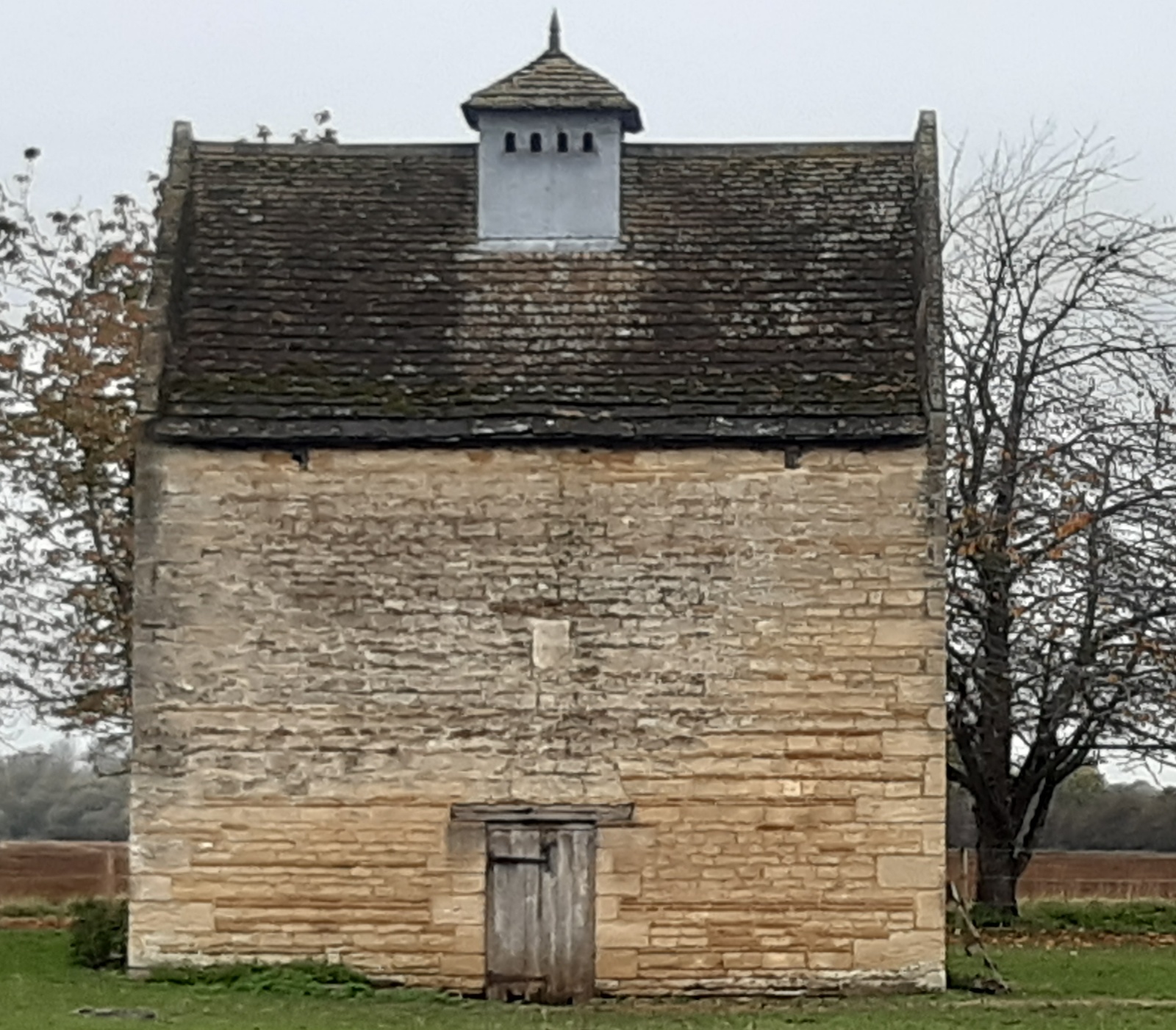
Finally, as I dropped of the dogs at home I saw our resident flock of House Sparrows in our front hedge, which prompted me to realise that certainly in my childhood and probably most of my adult life what I would have taken for granted as being common and present in every urban and farm building had not been spotted the entire walk!
This made me reflect on my answer to so many people I met on the walk who asked me, since I was carrying a pair of binoculars I assume, had I seen anything interesting? I admit in almost all cases I said “not much” as I knew they were wanting to hear about something unusual.
I am now prompted, even given the number of birds noted in this report, because they were sparse and even the common place birds that we all see regularly are well scattered across our countryside how much longer will these note be worthy of comment.
Is the absence of comments and observations on Langdyke’s Facebook page referencing House Sparrows because they are still so common that every post would contain mention of them or is it that we are a generation that still sees such birds as commonplace?
The last part of the walk along Jack Haws Lane alongside the lichen and moss covered walls in the centre of the village led me to The Millstone for a pint and a chat with some off the locals.
Conversation turned naturally to the state of our countryside and our demand for energy from renewable resources and the likely impact of growing crops for bio-mass, solar farms and wind turbines on our countryside. With not only the obvious changes these will bring about to our English landscapes, the probable need for extraction of more of the planets resources for the materials required to manufacture batteries to store the generated electricity clearly showed there is not a simple clean green solution to our hunger for evermore growth, energy and “improvement” in our living standards. Having commuted for 16 years daily between here and Kings Lynn I am not innocent of significantly damaging our environment, however, in some small way I am at now conscious of this, trying to do what I can to slow down the rate we are destroying our environment with the hope that there will be enough left for my grandchildren to build upon and start to significantly increase the bio-diversity of the natural world.
Having seen a significant number of projects throughout the walk that we are collectively working on and reserves we are managing, I am questioning if conservation is the wrong word? Is it a poor and doomed objective? Can we really expect to turn back the clock and conserve at a landscape scale natural flora and fauna that belongs in a pre-industrial world?
Climate change seems inevitable and whilst I have confidence that nature will adapt I am less certain that we will. The rate of change in our world is ever increasing, technology, medical science, transport, IT systems and innovations in consumer goods lead to shorter and shorter lifecycles as the “new” replaces “the old”. Even our political structures seem to last for only a brief period!
Our natural world is not immune to this increasing pace of change and changes which previously to generations to notice now occur within a few decades at the most. The biggest worry is our adjustment to the new norm. Our benchmark for what is normal seems become lower year on year. We celebrate a slight increase in butterflies one year as it is above the previous year’s low level. Beyond the re-introduction of a few iconic species that get headlines, and provide funding and great conversation starters, what are we really achieving?
We admire projects that re-introduce Red Kites to our landscape and often support and encourage the release of a few Beavers whilst doing nothing or very little to support and grow the populations of our resident (well just about) farmland birds and probably even less for the insects that support them.
This is not intended to ignite a political or radical campaign, there are far better individuals than I and organisations than Langdyke Countryside Trust to undertake this work but I would be happy if individuals reading this felt willing to join in such a way forward.
The purpose for me was to think through what changes I can and should make personally and to start a conversation perhaps on Facebook or elsewhere on what Langdyke Countryside Trust should be aiming to do, to leave at least our local environment so that our grandchildren, I think we can only hope that our children will continue to slow down the rate of decline, can start to reverse the damage we are doing. Like a supertanker (a pertinent analogy) the ship we are currently sailing will take a long time and travel a significant distance in the wrong direction before it turns around.
I will quote once more the most powerful quotation I have read on the topic:
“Most people seem willing to do anything for their children and grandchildren except leave them a decent planet” The Garden Jungle – Dave Goulson.
I look forward to some challenging conversations and discussions on the questions raised in my mind by this walk and working together on the journey ahead perhaps as a the “Fellowship of the Countryside” to borrow again from Tolkein.