

What’s happening on our
reserves right now
By Jackie Robinson
On all of our reserves and at home there seem to be a lot of yellow flowers.
It always puzzles me what they are; they mostly look like dandelion or buttercup flowers but are often taller so I thought I’d try and remember a few to stop keep asking Sarah Lambert and sometimes my Swaddywell reserves colleague Beryl the same question over and over again.
One of my favourites at Swaddywell is Yellow-wort. I can now recognise it even if it isn’t in flower as the leaves are a lovely blue-green and remind me of the Eucalyptus leaf. (Picture 3 below)

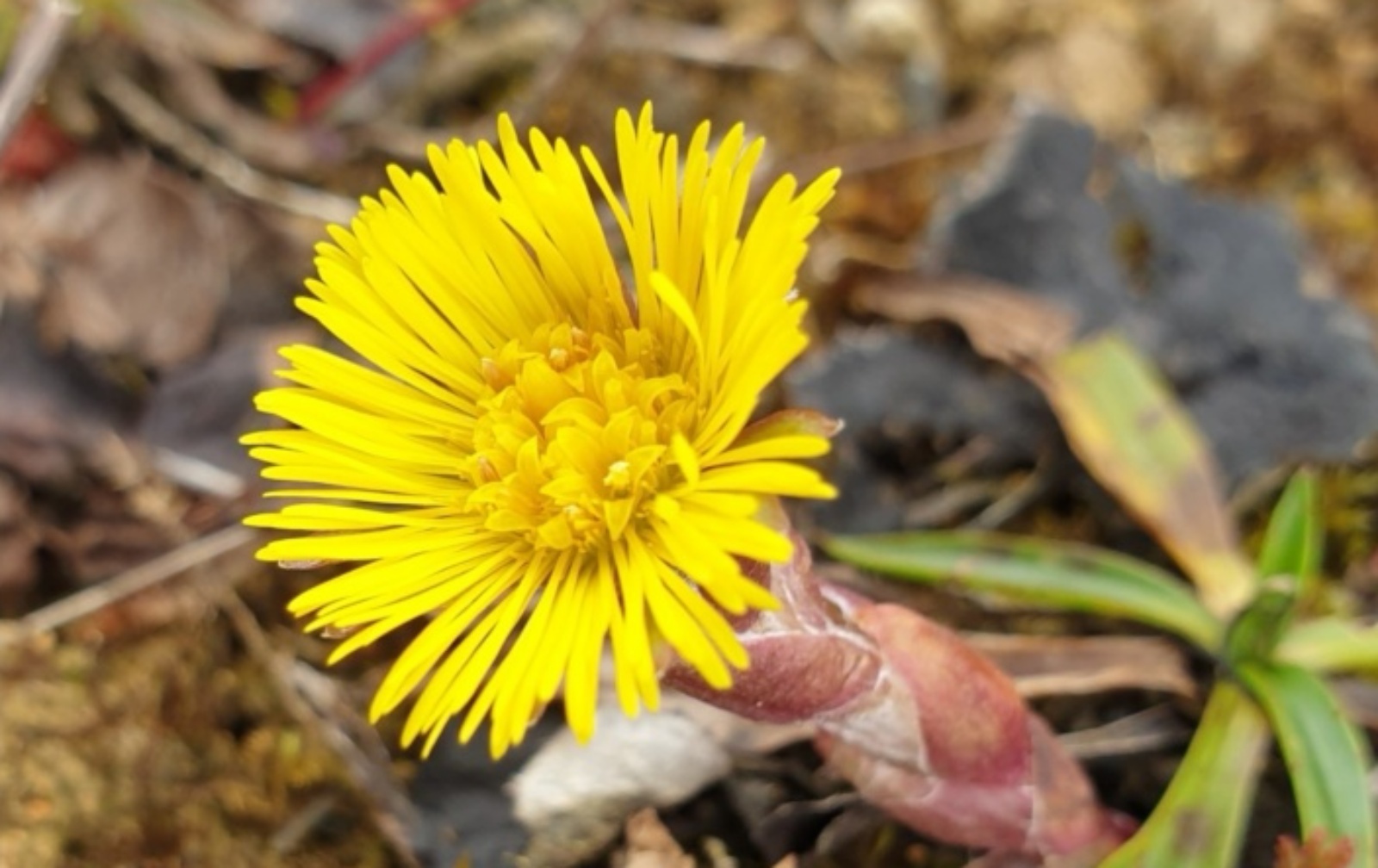
Colt’s-foot – Tussilago farfara – another lovely little plant that can be seen at Swaddywell. It’s one of the earlier ‘yellow’ flowers and looks like a short dandelion but with a much rounder middle. It can be seen on waste ground and field edges. Its flowers are borne on scaly stems and the leaves are rounded or heart-shaped. Seen from February until April it is quite low to the ground so has to be looked for.
Yellow Rattle Rhinanthus minor is an annual that thrives in grasslands, living a semi-parasitic life by feeding off the nutrients in the roots of nearby grasses; this encourages more delicate species to grow. The seeds rattle in their brown pods in the height of summer. Seen May to September (Hills and Holes)
Yellow-wort – ‘Blackstonia perfoliata’ – A plant of chalk and limestone grasslands with butter-yellow flowers and distinctive leaves which sit opposite each other, but are fused together around the stem. They are quite often small plants in the pit area of Swaddywell. Seen June to October.
King Cup – Marsh Marigold Caltha palustris a lover of damp places there is a large clump in the Cabin Pond at Swaddywell. (March- July)
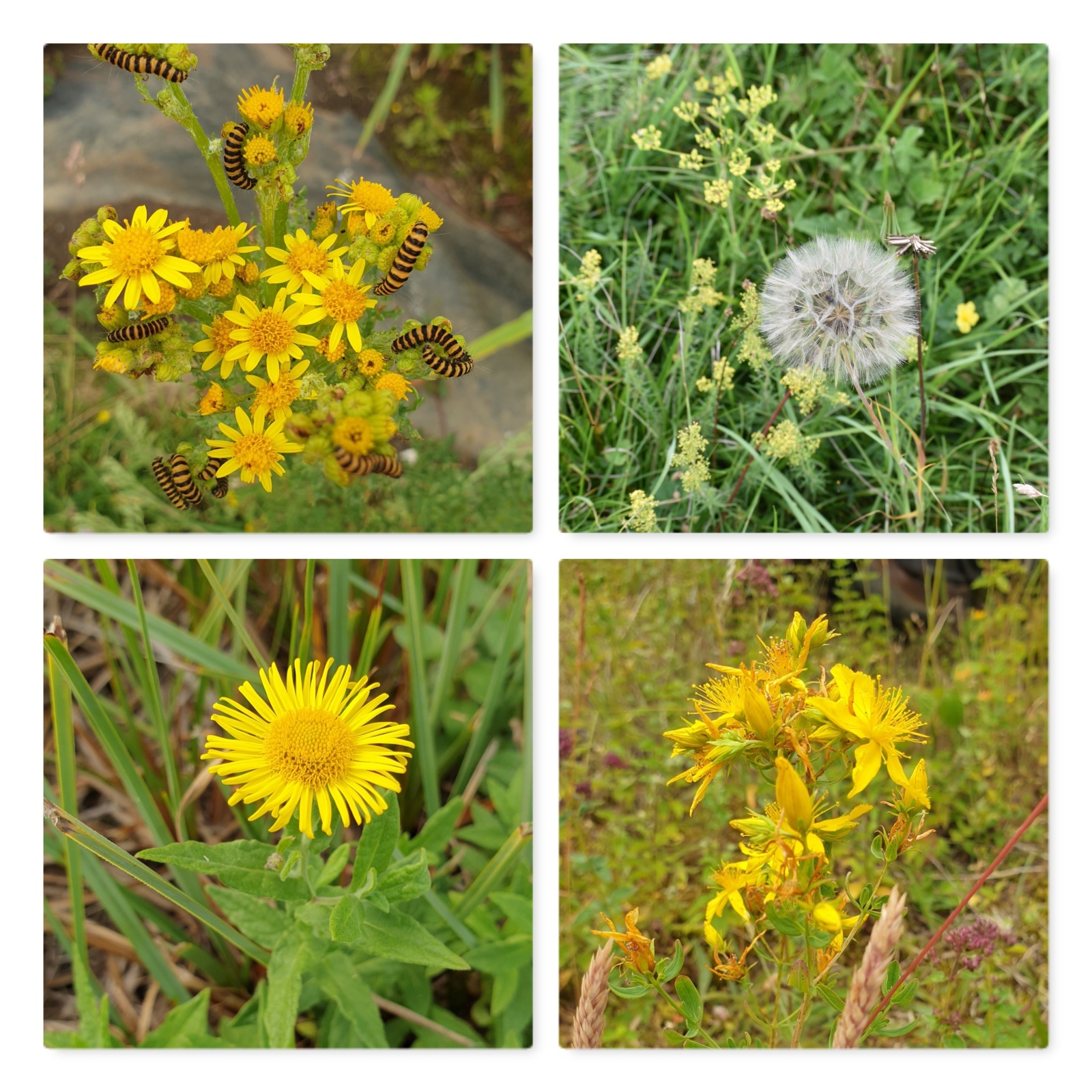
Common Ragwort – Senecio jacobaea is a relatively tall-growing plant that has clusters of yellow, flattened flower heads, and leaves that look ‘feathery’ because they are divided. Can be harmful if eaten by some livestock but extremely attractive to bees and other insects – the food plant of the Cinnabar Moth and is seen at Swaddywell and Etton . June to November
Goat’s beard – Jack go to bed at noon – Tragopogon pratensis The flower spike opens early in the morning and often closes up by late afternoon. Later the plant forms a seed head that resembles that of the dandelion but is distinctly larger. Short lived season June to July (Hills and Holes 2023)
Common Fleabane – Pulicaria dysenterica – a spreading perennial with branched hairy stems. Flowering from July to September it likes damp meadows, verges fens and pond and stream margins and Swaddywell. (Nature Spot)
Perforate St John’s-wort – Hypericum perforatum – a perennial plant that grows up to one metre tall, with many yellow flowers that have clearly visible black glands around their edges, long stamens, and three pistils. Often used in medicine. May to September (Nature Spot)
Incidentally, all of the photos are mine and were taken locally. and all errors are mine – corrections welcomed!
… Coming next time – Sowthistles, Toadflax, Bird’s foot Trefoil, Buttercups, Herb Bennett and Nipple-wort – more little yellow jobbies.