
It is actually good news that margins of the two main water areas at Etton Maxey pits are a muddy mess … thanks to a major project. You may have seen a digger on the reserve in the last couple of weeks. Reserve manager David Cowcill explains what has been going on …
A theme of my reserves update in the annual report was the need for ongoing maintenance and interventions to hold back some of the (sometimes undesirable) natural development on all the reserves. Etton Maxey has just seen the biggest intervention for several years.
Via the Wildlife Trust BCN Ponds programme and their support for the M’Lady’s Pond action, we were recommended to a ‘man and machine’ with the experience and capability to help us reverse the negative effects of the invasive species New Zealand Pond Weed – aka crassula.
This is now endemic in all the local (Maxey) lakes and it has such aggressive growth that it completely vegetates the lake margins – making them unattractive for the resident and migrating wading birds that used to “stop in” at the reserve.
But no more!
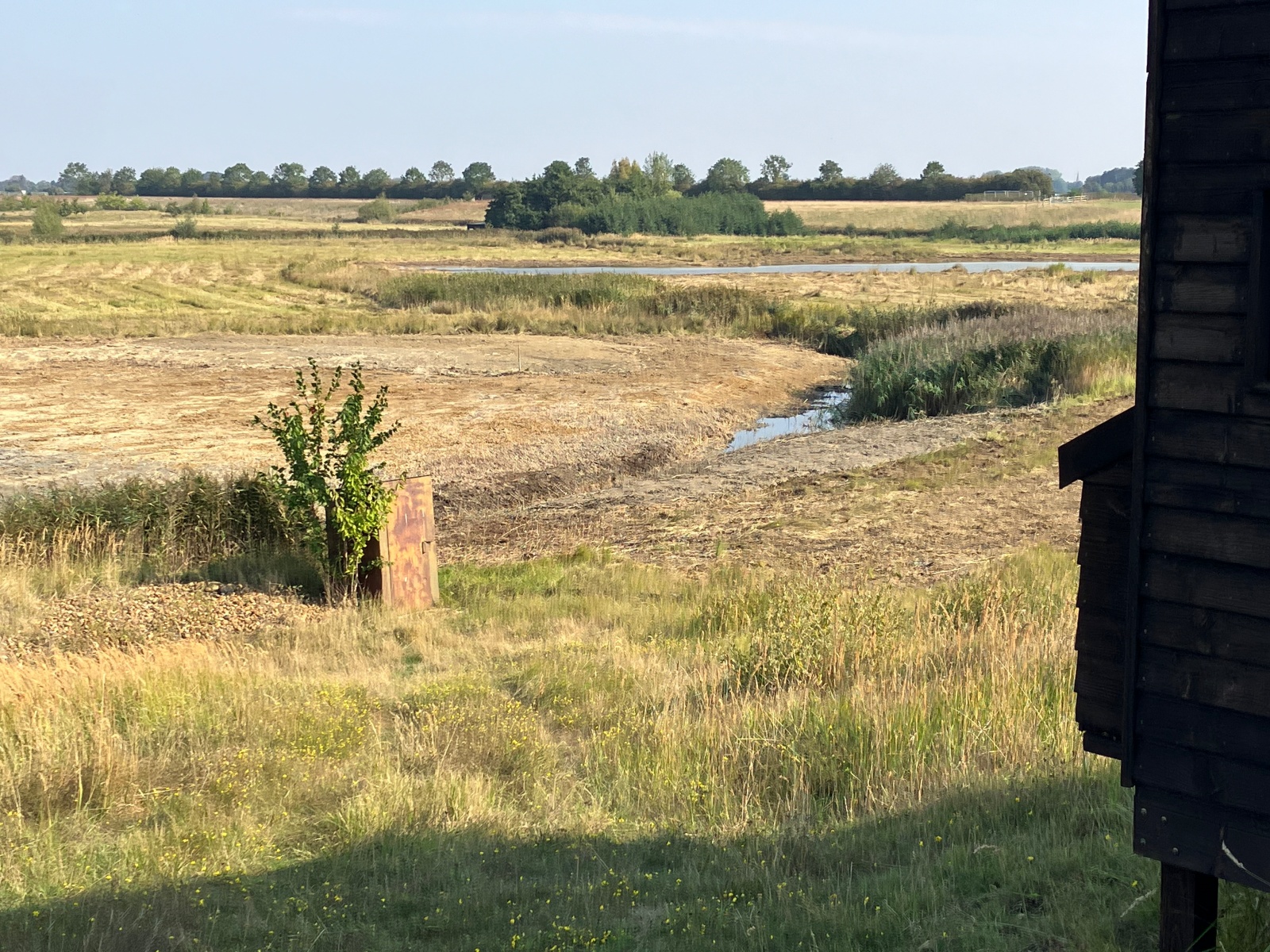
The lake margins on the lake north side (east and west in front of South Hide) are now an attractive sea of mud again. The scrape in Central Meadow has been scraped out after two years growth, and a new mini-scrape formed on Island Meadow where a shadowing clump of reeds had developed.
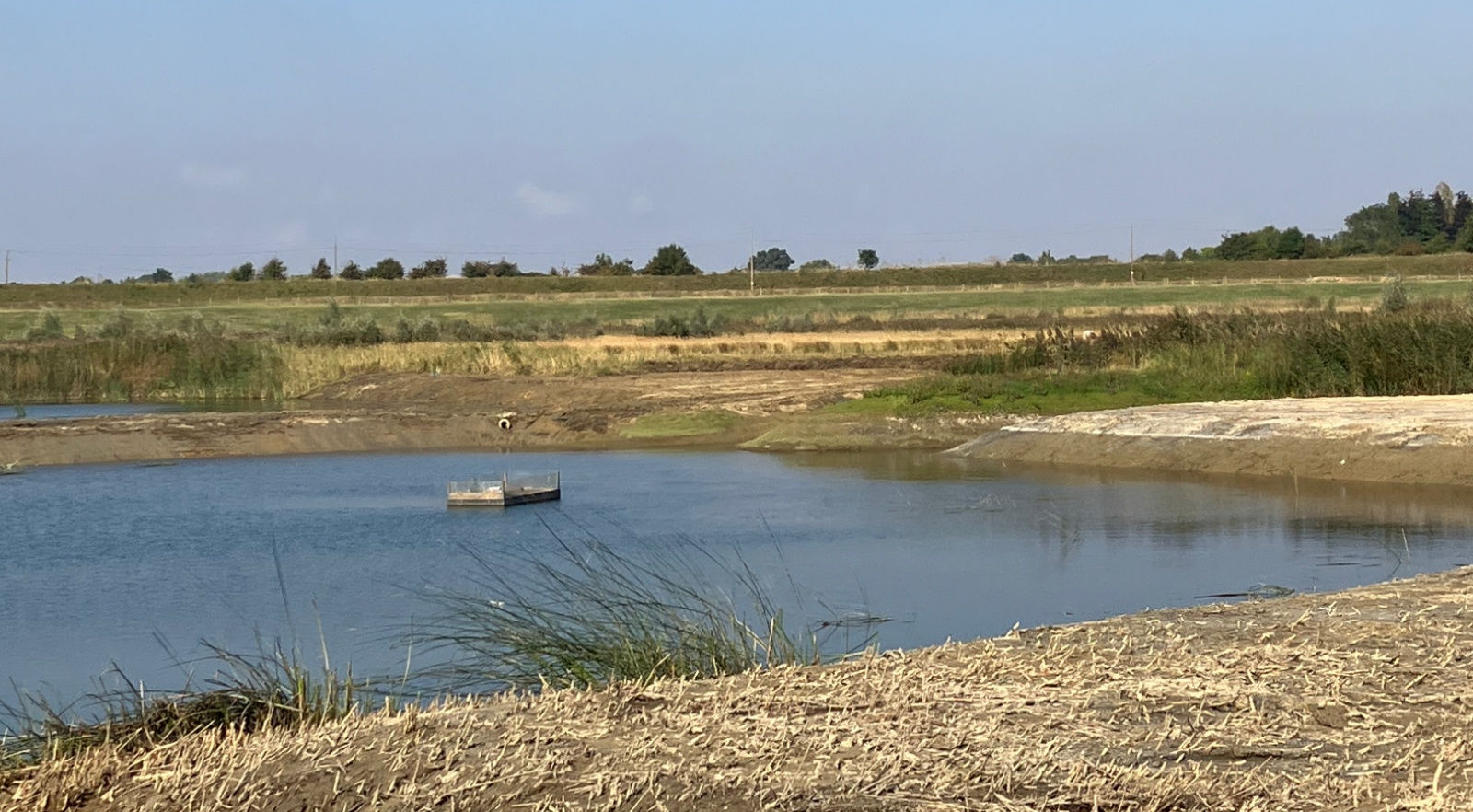
The herons, egrets and two purple ibis were very quick to take notice and browse to feed. I look forward to more migratory bird action to be viewed from the South Hide this coming Autumn and Winter. Please do make a visit soon.
The North Meadow Scrape was too wet to clear this year – we plan to lower the water level earlier next year to be able repeat the treatment after breeding birds (and seeding plants) have passed.
The crassula has spread throughout much of the wetter meadows and ditches of Etton Maxey, so cannot be eradicated completely. We expect to plan a repeat in some years time, according to how long this intervention lasts.
You can read more about crassula on the Botanical Society of Britain website