Volunteer Jackie Robinson continues her series looking at all things yellow on our reserves and in our gardens
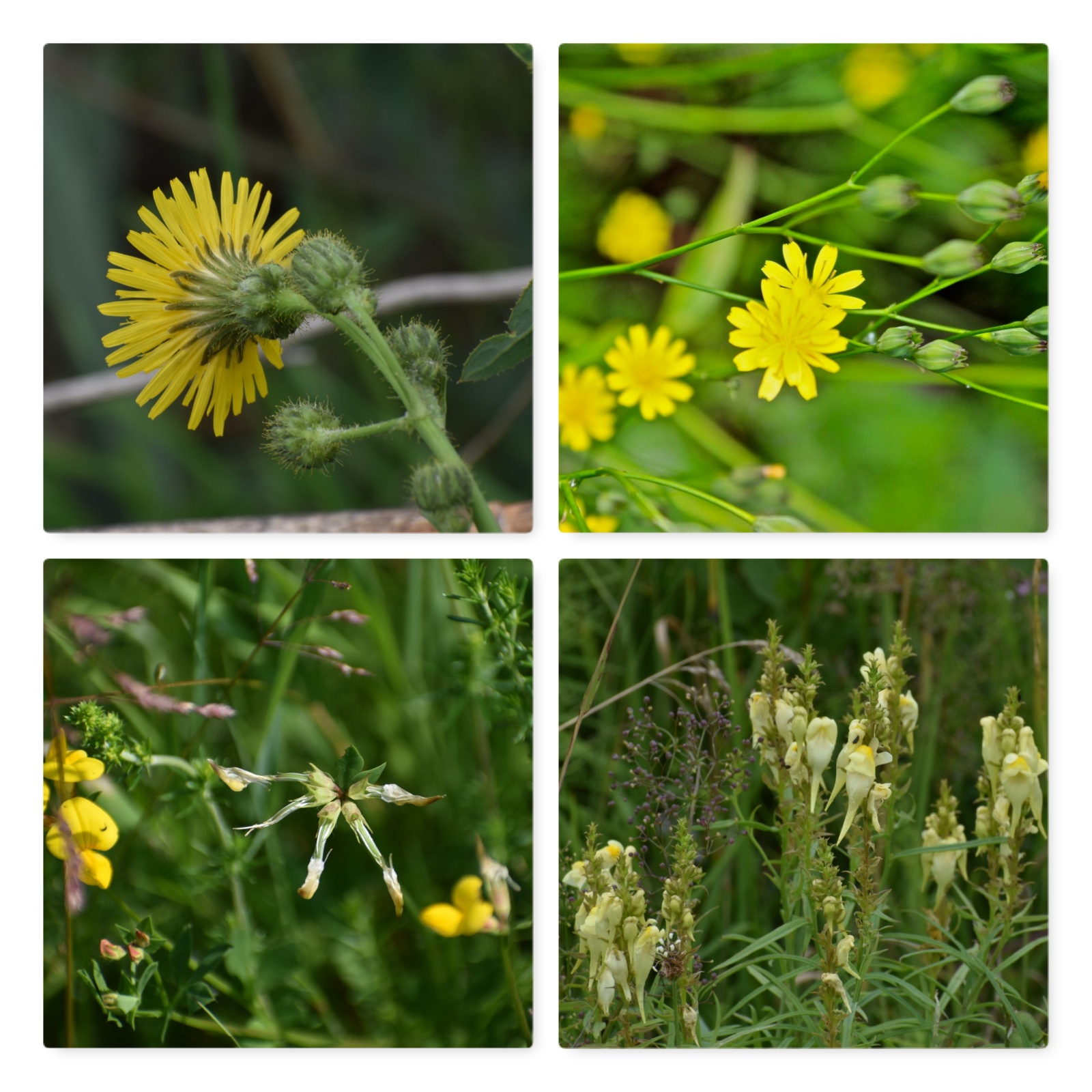
Perenniel Sow-thistle – Sonchus arvensis seems to be everywhere, certainly in my garden and on part of the green outside my house that is left wild. It has erect stems that can reach up to 1.5 metres and has a bright yellow flower in clusters. It grows on cultivated and waste ground as well as along river and stream margins and roadsides. The flower bracts have sticky yellow glands and when the seeds heads appear they are very fluffy!
Nipplewort – Laspsana communis can be a short or tall plant and has leafy stems. In my garden it looks quite a ‘weedy’ plant and is easy to pull but it is quite attractive. The leaves are oval tooted and the flower heads are a pale yellow.
Common Bird’s-foot-trefoil – Lotus corniculatus is a plant of many names. It is also known as ‘eggs and bacon’, ‘Granny’s toenails’, ‘butter and eggs’, ‘hen and chicken’. It has beautiful yellow slipper-like flowers, reddy-orange buds and claw-like seed pods. It has a sprawling, low growing nature and leaves with five leaflets which are downy.
The plant is an important food-plant for the caterpillars of Common Blue, Silver-studded Blue and Wood White butterflies (the last two not readily seen on our local reserves, as far as I know).
Can you believe I actually purchased a plant from a wild flower nursery when I could have attracted a few seeds to my shoes when I was out walking and stamped about my garden to release them!
Common Toadflax – Linaria vulgaris is a widespread which has beautifully delicate creamy yellow flowers with orange middles quite resembling the flowers of Antirrhinum aka snapdragon. In good weather conditions the flowers can stay around until November. The plant has upright stems and narrow leaves. Commonly found on waste ground, grassland, hedgerows and roadside verges, also sometimes called ‘butter and eggs’ The Common Toadflax provides a food source for Buff-tailed, White-tailed, Common carder and Honey bees. It also attracts many fly species. All in all a very pretty and useful plant to have in the garden as well as on the reserves.
When you look around the reserves and roadsides now the ‘Purple’ phase is coming into play. So many lovely lilac and purple flowers starting to bloom now from thistles to bellflowers and knapweeds; identifying nature is a tricky business unless you are lucky enough to have travelled with Sarah Lambert when she leads a Wildlife Trust holiday – I’m hooked!! (33 species of orchid in a few days!)