
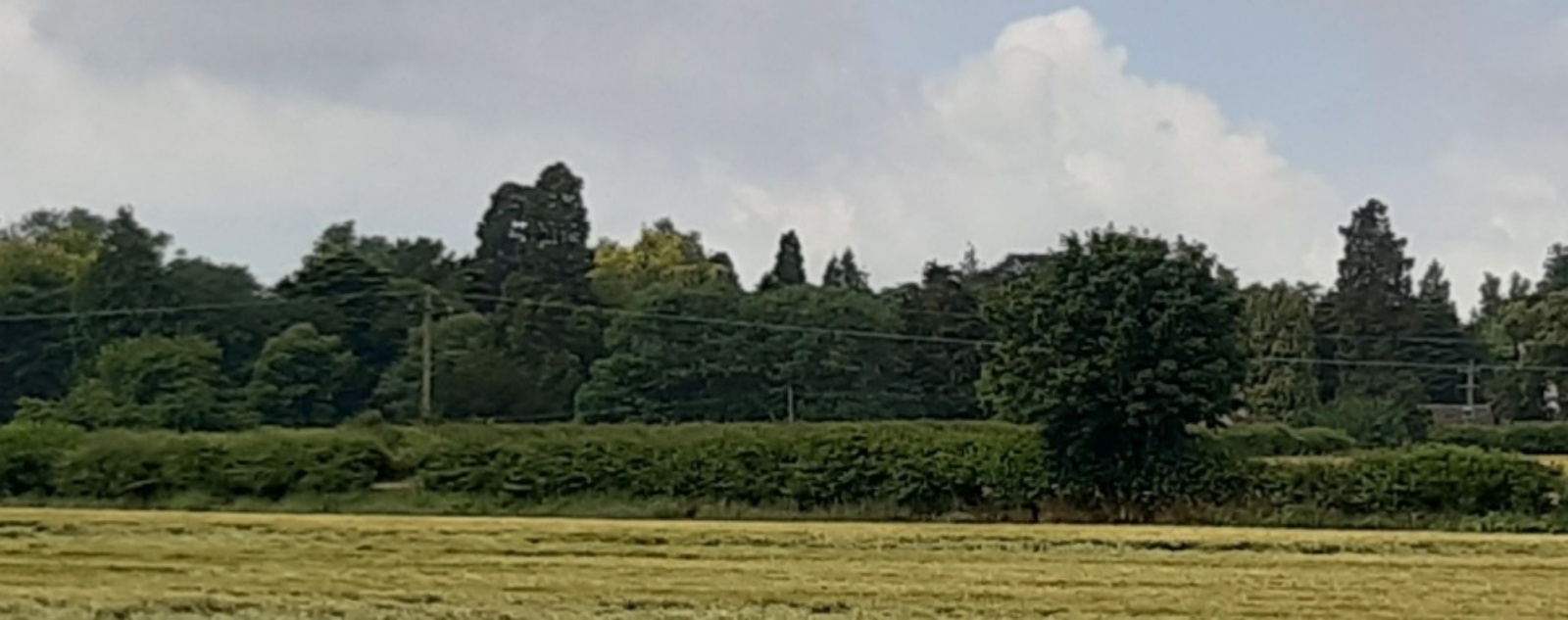
Is this what our woodlands should look like in 50 years time?
Langdyke hosted an extremely entertaining and thought provoking dialogue between Adam Frost Garden Designer and presenter on BBC Gardener’s world, Geraint Richards, Head Forester for the Duchy of Cornwall, and Tony Kirkham who currently holds the top job in arboriculture as Kew’s Head of Arboretum, Gardens and Horticultural Services. Here are some of the points and thoughts Langdyke trustee David Alvey took away from the conversation. Some are his personal interpretations so feel free to join in with the trust to take forward the discussion on what our woodlands should look like, what should be planted in our local parklands, pastures and hedgerows and of course what trees should we be planting in our gardens? The image below of the arboretum at Walcot Hall presents an interesting starting point for the debate.

In 1987 some of you may remember a famous storm that took down around 15 million trees across the south east including six of the seven oaks that gave Sevenoaks its name!
I certainly remember having to walk to work that day. All public transport was disrupted and almost every street had at least one fallen tree blocking the road and we were living in the heart of suburban London at the time.
A phone call from my mother-in-law woke us up to ask if “we were all right?” Not until we drew back the curtains and saw the huge Lime tree opposite our house lying across the road were we aware that anything had happened.
Perhaps the one benefit of having two small children at the time is that you can sleep through anything except them crying!
One benefit of the storm was that it awoke awareness of the need to look after our trees and care for them. With excessive compaction of their root systems, the large monoculture plantings and the simple deforestation of large areas, the need for change was now obvious.
This was perhaps one of the first indications that we should expect more extreme weather conditions, it is certainly the first one I am aware of. We continue now to see an ever increasing pace of change and frequency of extremes in our climate and our trees are perhaps less able and certainly less swiftly able to adapt. After all many of them have life cycles three, four or even ten times our own!
The most obvious and particular challenge that the trees face is that historically they had a six month dormant (rest period) from October through to March/April. Now many of them are still in leaf in December and a warm March can mean they have less than three months rest! Imagine if we had half the sleep we need during our life time how we would feel and how resilient to pests and disease we might become!
The diseases and pest that spread them have also become all too familiar to many of us. Perhaps starting with Dutch Elm disease, and now progressing with Ash die back to change our landscape forever. The Horse Chestnuts suffering from leaf miners and even our oak trees are suffering from acute oak decline. This is all before the much publicised threat of Xyella reaches our shores.
So with all this bad news what should we be doing. The obvious first step is to wake up to the need for improved bio-security. Therefore, the sourcing plants with plant passports from local or reputable sources is now essential.
Then what should we plant? Here, as with so much today in nature, “Diversity” is the key word. Diversity in structure, diversity in age and diversity in species.
For woodland structure we need to copy nature more and look beyond just the canopy. Not thinking only about the canopy but also the other two woodland layers.
What will we plant or encourage as an under canopy?
Can thorn bushes be used to protect the trees from deer as they become established?
What shrubs will give shade to the roots and for interest what ground cover can we establish in the short term?
To ensure the future of our woods and trees we need to consider age. As with many of our decisions today speed is often the primary driver. Since the 1950’s imported species of conifers have been planted for their rapid growth and simple timber production. In the past 50 years, for much the same reasons of rapid and straight growth, we have planted them to screen our gardens.
Our choice of what we plant today is influenced by speed. We choose pioneer species such as birch, alder and rowan as trees that establish and grow quickly but they only have a short life cycle, may be 50 years at the most. We need to be planting more oak, elm and limes for the future. We may not benefit from them in our lifetimes but neither did the great landscape designers of the past. We would not be enjoying the magnificent oaks in Burghley park without the vision of those who planted them centuries ago.
No longer do we see mass mono-culture forest plantings. Diversity in species has now been widely recognised as essential for a healthy woodland. It also can provide good quality habitat in the countryside and improved garden habitat for our invertebrates and pollinators in particular. Perhaps the most controversial topic discussed was the call for expanding the diversity of species. The choice of trees we make is becoming much more important. As our climate changes are native trees, whilst still important, the only solution?
Should we be looking beyond what we consider our native species (e.g oak, sycamore, lime, beech, ash) and even the naturalised species that we enjoy (e.g. Wild Service, Sweet Chestnut) to what we might call exotic trees. The team discussed sourcing trees from various areas of the world.
Species from the north eastern seaboard of North America, or ones that are established in the Caucasus, Georgia and Turkey. All areas whose climate may well more closely represent our climate in the relative near, in tree terms, future!
Some of the ideas and suggestions to consider when planting were provided by the team and are listed below. I hope I captured most of them correctly.
Japanese Rowan (Sorbus commixta), Plane Trees, hybrid poplars, Black Poplar, Black Walnut, Fagus Sylvatica, Fagus Orientalis, Tulip tree, English Oak, Limes, Redwoods under planted with ferns in cool soil. The team members present felt they had to exert more influence on the nurseries to make a broader range of species available. Perhaps we as consumers can help that change by asking for a wider choice, always bearing in mind locally grown would be best and bio-security is essential.
As well as trees the team felt we should look to plant and grow bigger hedges. Letting hedge plants reach their true size both in height and spread. The benefit of large hedges in capturing particulates, noise reduction, providing shelter and of course opportunities for wildlife to thrive is becoming well understood. So perhaps we are challenged to change to some extent our obsession with scrub removal and tidy trimming of hedgerows.
On a similar topic re-wilding was discussed and the point was made that if attempted in a ” poor area for species and trees” then it will only generate poor woodland. A combination of nature and a helping hand with introductions is definitely required.
The team also reminded us that planting trees is the easy part but getting them established is the challenge and where the hard work needs to occur. So we must ensure for our tree planting projects we have a plan and the capacity of effort in place to see at least the start of the process of improving our landscape through to a successful conclusion of the first stage.
The final essential gap the team felt needed to be closed is that of engagement with secondary schools and following on with much greater efforts to engage with the 20-30 year olds today. I think we all see the natural curiosity of the young during primary education and the willingness, time and financial capacity of the over 50’s, in almost all of the activities in which we engage but how do we close the gap?
A very big thank you to the three contributors for being so willing and entertaining in their engagement with the Langdyke audience and providing what I feel is a big agenda to develop for the John Clare Countryside vision.
Particularly in urban areas the team felt we should be more daring but I also think we need to think seriously about what we can and should do in our gardens, our parklands and our local countryside to ensure we provide our children, grandchildren and great grandchildren with a landscape worth inheriting.