

Our newest nature site
Langdyke’s newest nature site is the Christ’s College Pits Reserve which the Trust acquired in 2024.
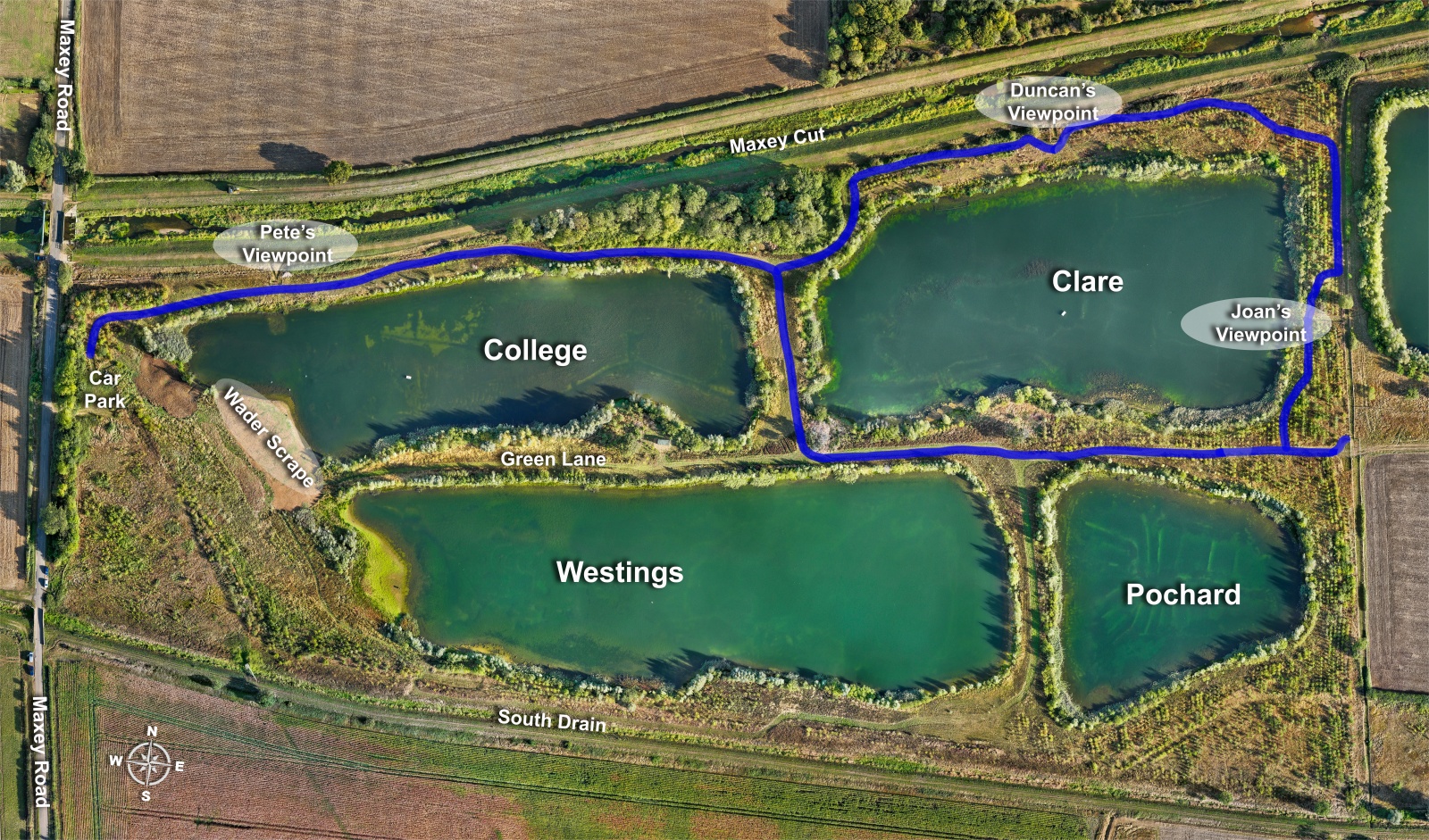
Photo by Kim Lupton
Location: what3words simply.lectures.yesterday.
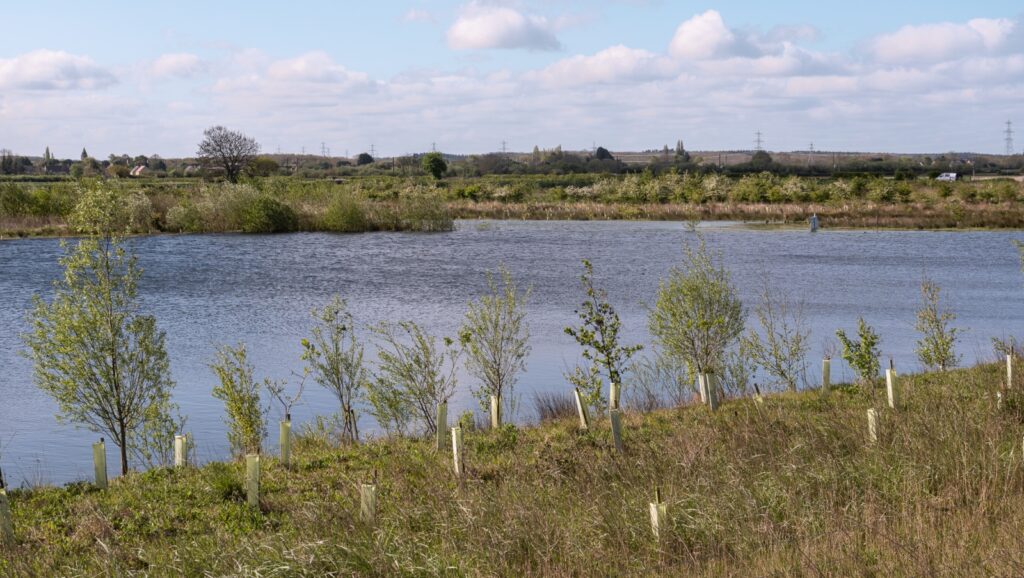
The nature reserve is made up of 22 acres of restored gravel pits, surrounded by new planting of native trees and shrubs.

Photo: Brian Lawrence
It lies on the northern boundary of the parish of Helpston, with the parish of Maxey just across the adjacent Maxey Cut, a key flood defence channel that protects the settlements at the Deepings.
Helpston lies half a mile to the south, a short walk or bike ride along the road; while the village of Maxey can be reached through footpaths along the Cut and then up Woodgate Lane. It is also within a short walking distance of Etton,
Prior to gravel extraction in the early 2000s the land was arable and would have been farmed as such for many years. Historically, however, it was part of the much larger Westings Meadow, an area of damp meadows and marshland that was a vital source of grazing for the adjacent villages and would have been rich in biodiversity.
The poet John Clare, who was born in Helpston, would have known the area well and it is probably areas such as this that he would have been describing in such poems as “The Mores” and “The Snipe”.
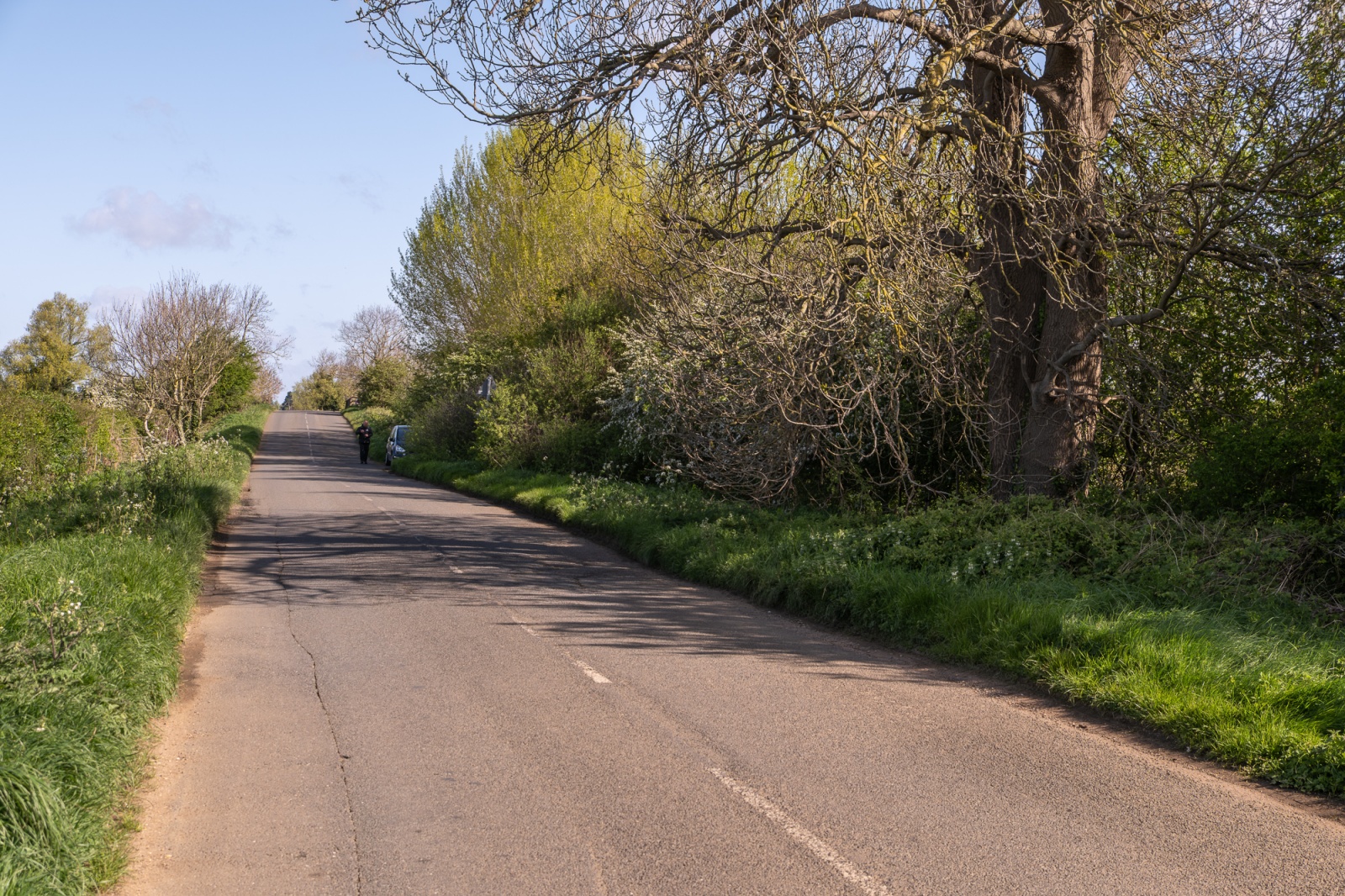
The boundaries of the land are formed by the road between Helpston and Maxey to the west, from which it is protected by a shelter belt planted as part of the restoration after gravel extraction; by the south bank of the Maxey Cut to the north, which has a well-used footpath along the top, currently offering views over the entire site; and by a public footpath to the east. To the south and southwest the land is owned by two separate private owners.
As a result of the gravel extraction and subsequent restoration the land now comprises two large separate water areas – College Pit and John Clare Pit – with attendant water margins, which in some areas are reasonably bare, providing feeding habitat for ducks and wading birds.
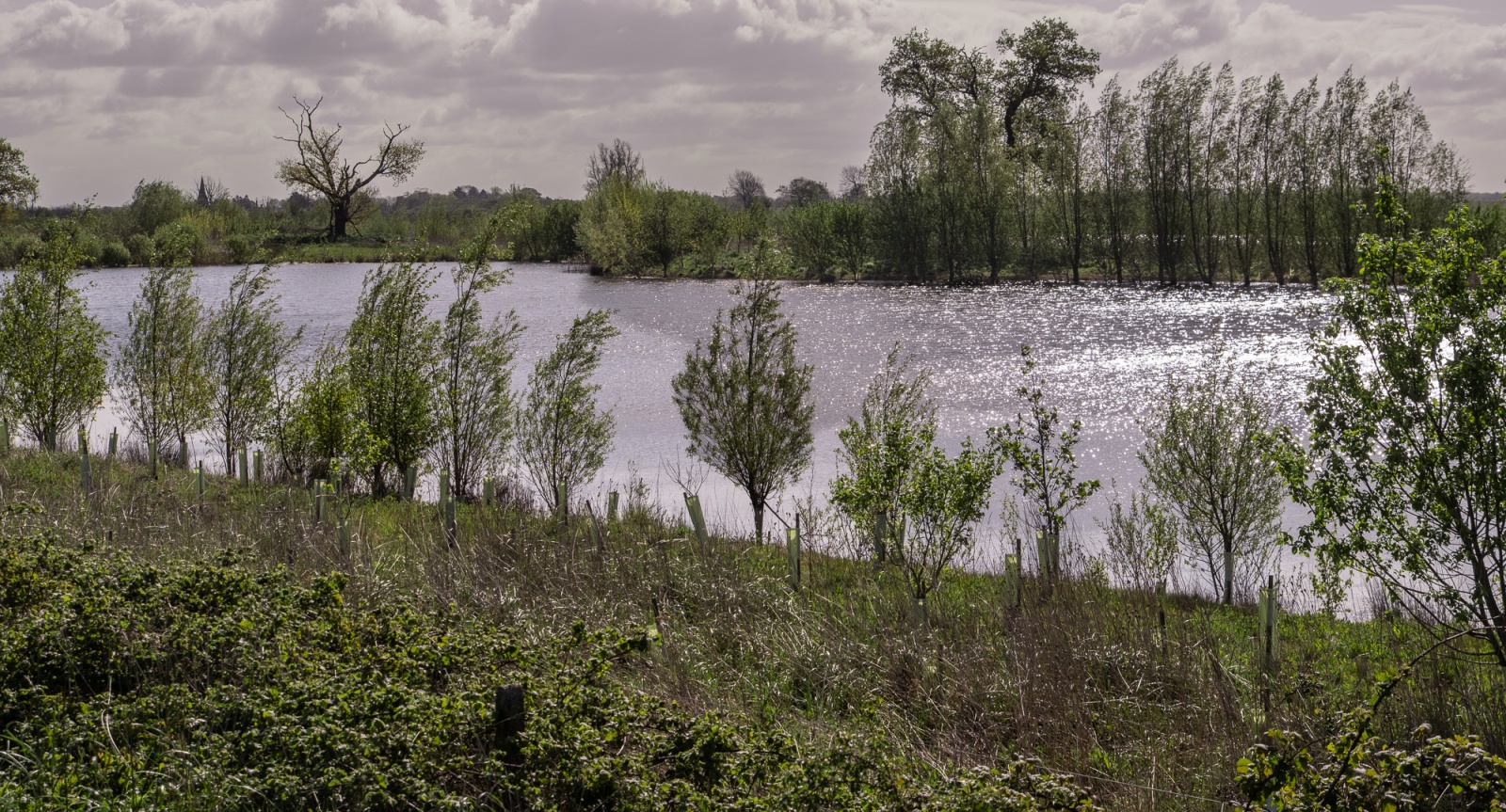
Photo: Brian Lawrence
The surrounding land has been planted with native species, including wayfaring tree, ash, willow and guelder rose. Although the planting is extensive there are also open areas of grassland with populations of wildflowers.
Three large, ancient oaks sit along the southern boundary. There is a small area of woodland on the northern boundary with the Cut and the shelter belt along the western boundary.
Of particular relevance to the future of Christ’s College Reserve are the Trust’s existing reserves at Etton Maxey Pits, Etton High Meadow and Vergette Wood Meadow. The Trust has also recently entered into agreements with landowners between these reserves and Christ’s College Reserve in order to manage two other areas for nature which would link Christ’s Pits to Vergette High Meadow, creating a block of land under management for nature and for people from the road between Helpston and Maxey to the road between Etton and Maxey..
Opportunity to purchase the pits
Christ’s College, Cambridge offered Langdyke the opportunity to purchase the freehold of the pits for a price of £45,000 and gave it 12 months from October 2022 to raise the money which it successfully did thanks to various grants and generous donations..
The College explained to the Trust through its agents that it had also received alternative offers for the land, but turned these down in favour of the option to sell to Langdyke and establish a nature reserve, recognising the contribution this makes to the biodiversity crisis and to the local community.
Wildlife Value of the Site
As a newly established site, following restoration, the site currently has a limited range of biodiversity but with considerable potential for the future. Langdyke is currently undertaking surveys to gain a more detailed understanding.
Nevertheless, we already know that the site is used by wintering duck, including gadwall, mallard, wigeon, teal and shoveler. Tufted duck and mallard also breed, as do great crested and little grebe.
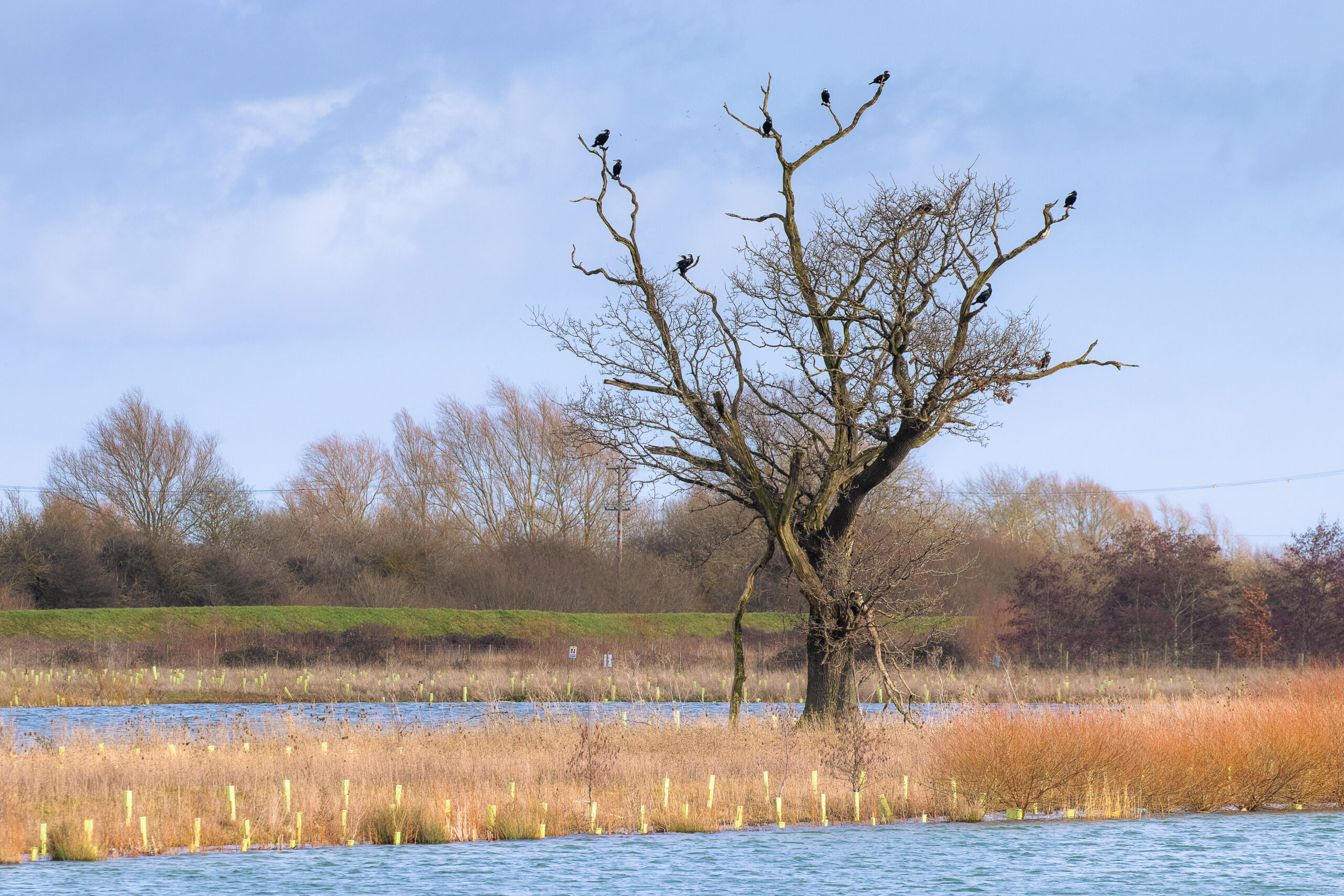
Photo: Sarah Lambert
Snipe and lapwing are found in winter, with lapwing also using the site to feed during the breeding season (they nest on the neighbouring fields). The pits also provide a feeding site for swifts and hirundines, as well as grey heron and little egret.
Redshank, and Common and Green sandpiper also use the margins of the pits on migration. Little owls bred in the oak trees until very recently and barn owls hunt over the grassy areas.
Otters are often seen in the neighbouring Maxey Cut and may well use the site to breed, feed or rest. More surveys are required to understand the botany of the site and its insect populations, but several species of dragonfly have already been observed.
Of particular significance are the populations of four spotted moth and glow-worm which are found on the adjacent areas of the Maxey Cut. The four spotted is a UK BAP priority and red-data book species. In the summer of 2022 surveys along the Cut by members of Butterfly Conservation revealed important numbers of the moth feeding on field bindweed on its banks.
Surveys of glow-worm have also detected regionally significant numbers of this beetle on the Maxey Cut in the areas immediately north of Christ’s College Reserve.
The wider area is also very important for another red data species, turtle dove. Langdyke already operates within the framework of the RSPB’s Operation Turtle Dove to sustain what is one of the densest concentrations of this species in the region through habitat creation and supplementary feeding.
In summer 2022 at least five calling males were detected in the area between the Helpston-Maxey and Etton-Maxey roads, including on the Trust’s three current reserves. Supplementary feeding takes place on the Etton Maxey reserve.
- Langdyke’s management plans for the site are focused on providing additional habitat for these three key species. The site is ideal as nesting habitat for turtle doves and simple management of its northern areas should provide additional habitat for four-spotted moth and glow-worm.
Plans for the site
A detailed management plan has not yet been drawn up but initial walks over the site have suggested the following
- Creation of three viewing points to allow the general public to view the pits and enjoy its key natural features
- Development of small open areas of grassland along the boundary with the Maxey Cut specifically designed to support the expansion on to the site of the existing colonies of four spotted moth and glow-worm
- Creation of a further point for supplementary feeding of turtle dove, near the eastern boundary of the site
- Controlling the spread of the invasive species crassula, so that margins are retained around the pits to provide food-sources for ducks and wading birds
- Creation of new seasonal water scrapes within the grassland areas to provide habitat for amphibians and aquatic insects
- Installation of tern rafts on both pits
- Installation of owl and bat boxes
- Installation of a sand martin nest box viewable from the public viewing points
- Creation of an artificial bank suitable for kingfishers
Anticipated Outcomes
The key outcomes we anticipate are
- Breeding populations of turtle dove, common tern, sand martin and kingfisher as well as grebes, coot, moorhen and tufted duck
- Wintering populations of snipe, lapwing, green sandpiper
- Establishment of colonies of four spotted moth and glow-worm on the reserve itself, as they expand from their existing colonies on the Cut
- Development of populations of other key insect and amphibian species.
Public Access
Because of its sensitivity to disturbance and the health and safety hazards associated with large water-bodies, we are not proposing open access to the site. Instead, the Trust proposes to create two viewing points that can be accessed from the Cut and one from the footpath on the eastern boundary. This would involve realigning the fence so that there was access to within twometres of the water’s edge at each of these points. Screens will be erected to avoid unnecessary disturbance but to allow views over the water.
Each of the viewing points will contain a bench, viewing screen and interpretation board, explaining different aspects of the biodiversity of the site and its history with particular references to Westings Meadow and to John Clare.
In addition, Langdyke will organise (as part of its regular programme of events –a series of regular guided walks around the site, open to all members of the public.
The banks of the Maxey Cut are already well used by local people and residents from nearby suburbs of Peterborough. They are popular places for dog walks and family walks. The views across Christ’s College Reserve are currently open and enjoyed by many visitors. These will, however, be obscured in time as the trees that have been planted grow (this has already happened at the adjacent Grebe Pit). The viewing points as described above have been proposed in order to allow visitors to continue to enjoy views across the pits and of its wildlife.
The footpath on the eastern border is also well used as it creates a round walk between the Cut and the South Drain.